
1
Set the scene
Start with context
Fill the frame
2–3 ft for close-ups; keep ladders, cords and workers fully in view.
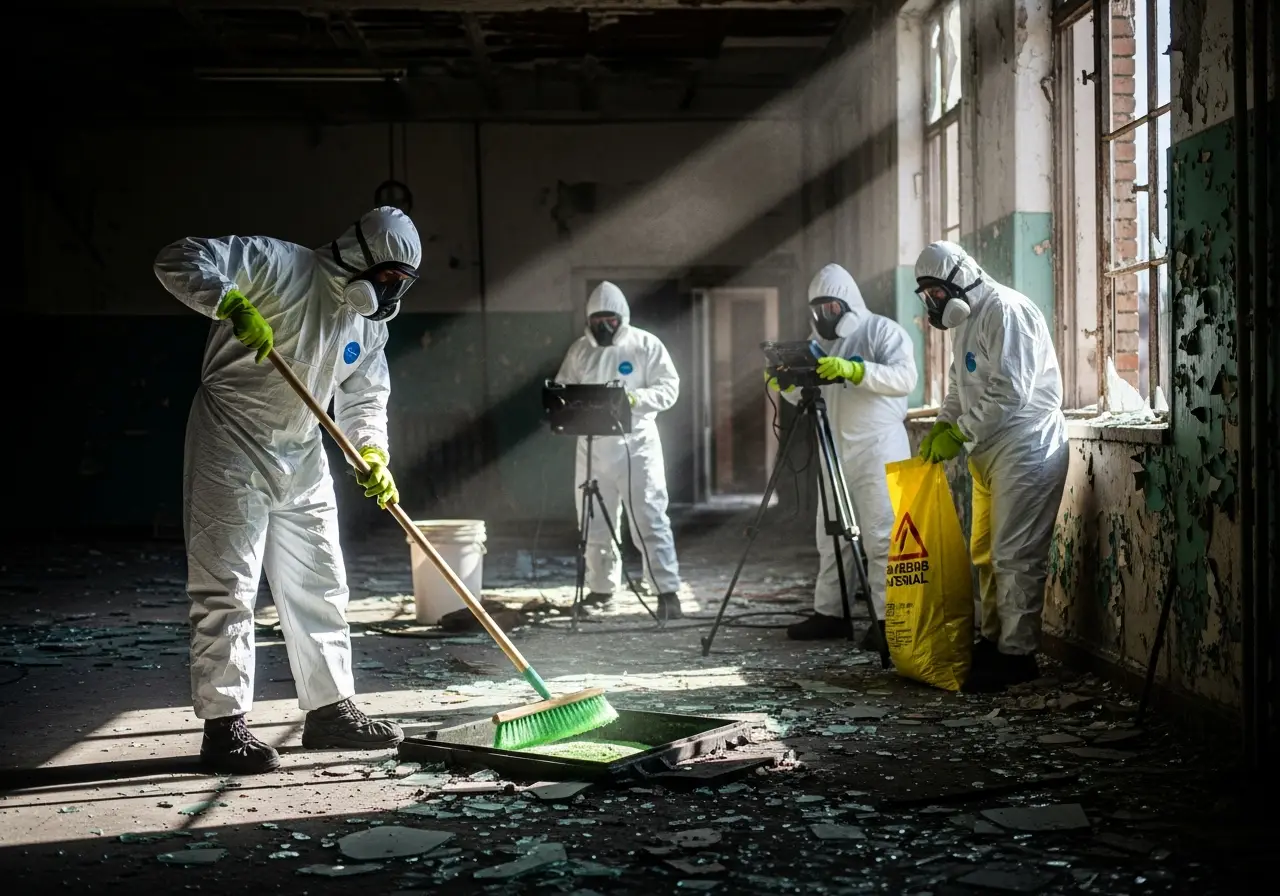
Asbestos fibers, chemical exposure, and respiratory risk
Asbestos and hazardous chemicals cause disease that can take twenty to forty years to appear, so protection has to be perfect the first time. OSHA Scan analyzes abatement and hazmat photos to catch containment, decontamination, and respiratory-protection failures before workers are exposed.
Free · No account needed to scan · Results in seconds
latency before asbestos disease appears
OSHA asbestos permissible exposure limit
estimated asbestos-related U.S. deaths a year
level of asbestos exposure is considered safe
Upload a real job-site photo and OSHA Scan detects visible hazmat and asbestos hazards in seconds — no account needed to run your first scan.
Use the real site or facility name. If you save the scan after signup, it becomes the report name.
Three angles, one deeper scan
Only the wide shot is required — every extra angle gives the AI more places to look.
Required: Set the scene — one wide shot lets the AI sweep the whole area at once
Stand at the entry point and capture corner to corner: floors, ladders, scaffolds, and everyone at work
Drop a job-site photo or walkthrough video
Click to upload, drag & drop, or snap a photo on site. Photos scan free in about 15 seconds — no signup, no card. Video walkthroughs (up to 3 min) run on a free account.
Small habits, sharper scans
Set the scene
Start with context
Fill the frame
2–3 ft for close-ups; keep ladders, cords and workers fully in view.
Capture clearly
Make the frame usable
Light it right
Keep the sun or lights behind you — glare and shadows hide hazards.
Tap to focus
Tap the hazard on screen and hold still one second — blur can't be flagged.
Choose the useful view
Give the AI room to understand
Go landscape
Turn your phone sideways — a wider frame catches more of the scene.
Only upload photos you have permission to use, and avoid images showing personal, customer, or confidential information. Demo photos and results are held privately for up to 48 hours so you can save them to a free account; unclaimed photos are deleted automatically. Results are an AI-assisted preliminary review, not an official OSHA determination.
Here is what an OSHA Scan report looks like for hazmat and asbestos hazards. It is an illustrative example built from this trade's hazards — clearly marked, not live scan data.
Compliance score
64
Lower means more potential hazards found
3 potential hazards found
Uncontained asbestos removal
Possibly related to Asbestos (general industry) (29 CFR 1910.1001)
Observed condition: A crew removes asbestos pipe insulation without a sealed containment or negative air.
Corrective action: Build sealed containments with negative-air HEPA filtration for asbestos
High confidence
Dry removal of asbestos
Possibly related to Asbestos (construction) (29 CFR 1926.1101)
Observed condition: Workers strip asbestos floor tile dry instead of using wet methods, sending a cloud of fibers into the air far above the permissible limit.
Corrective action: Use wet methods to suppress fibers and dust during removal
Medium confidenceNot fully clear from the photo — verify on site.
Skipped decontamination
Possibly related to Hazard communication (29 CFR 1910.1200)
Observed condition: A worker exits the work area without going through decontamination, carrying fibers on clothing into clean areas and vehicles, spreading contamination home.
Corrective action: Provide local exhaust ventilation for chemical vapors
High confidence
Illustrative AI-assisted workflows. Review the findings; they are not a compliance certification.
Hazmat and asbestos removal exposes workers to some of the most serious long-term health hazards in the trades. Asbestos fibers, released when disturbing insulation, floor tile, pipe lagging, and other legacy materials, are microscopic and, once inhaled, lodge permanently in the lungs. There is no known safe level of exposure, and the resulting diseases — asbestosis, lung cancer, and mesothelioma — often appear decades later.
Primary OSHA standard: 29 CFR 1910.1001
Hazmat and asbestos removal exposes workers to some of the most serious long-term health hazards in the trades. Asbestos fibers, released when disturbing insulation, floor tile, pipe lagging, and other legacy materials, are microscopic and, once inhaled, lodge permanently in the lungs. There is no known safe level of exposure, and the resulting diseases — asbestosis, lung cancer, and mesothelioma — often appear decades later.
Chemical hazards are equally serious. Abatement and hazmat work involves solvents, acids, heavy metals like lead, and other toxic substances that can cause respiratory damage, chemical burns, poisoning, and long-term organ and neurological harm. Many are absorbed through the skin as well as inhaled, and some are flammable, adding fire and explosion risk.
What makes this work uniquely demanding is that the hazards are invisible and the consequences delayed. Because a worker cannot see fibers or smell many toxic vapors and feels fine at the time, rigorous containment, air monitoring, decontamination, and respiratory protection are the only reliable defenses — and any lapse can cause harm that surfaces only years afterward.
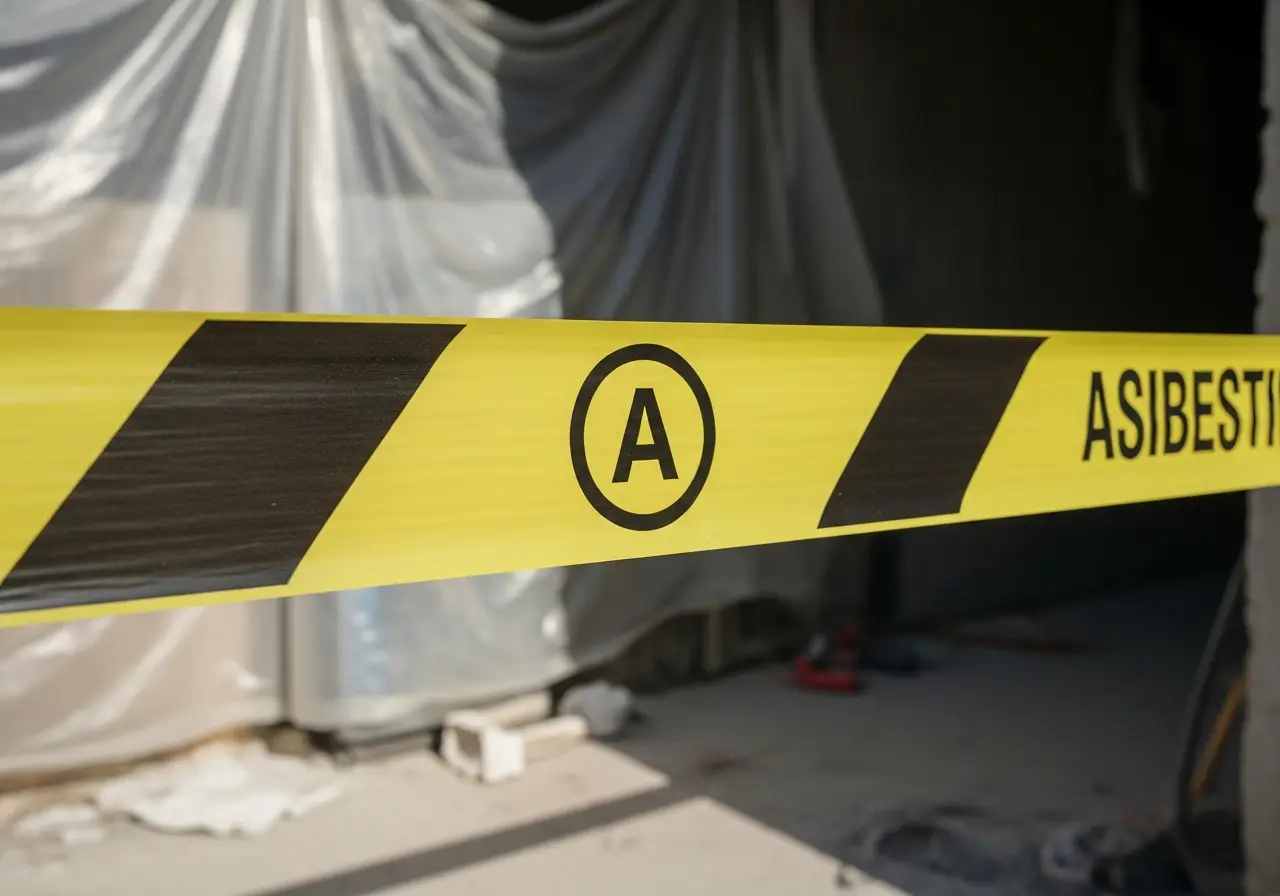
Asbestos and hazardous-chemical work is tightly regulated by OSHA and the EPA. Violations bring heavy penalties and potential criminal liability.
Exposure causes incurable, often fatal disease that may not appear for decades, making prevention the only real protection.
Improper abatement creates long-tail liability, cleanup costs, and lawsuits that can surface many years after the job.
Licensed, well-documented abatement contractors are trusted with sensitive projects that require certified handling.
A crew removes asbestos pipe insulation without a sealed containment or negative air. Fibers spread through the building and expose both workers and occupants who had no idea they were at risk.
Workers strip asbestos floor tile dry instead of using wet methods, sending a cloud of fibers into the air far above the permissible limit.
A worker exits the work area without going through decontamination, carrying fibers on clothing into clean areas and vehicles, spreading contamination home.
A worker handles a corrosive solvent without the right gloves and respirator, suffering chemical burns and respiratory irritation from vapor.
A worker wears a respirator that was never fit-tested and does not seal against his face, allowing contaminated air to leak in during removal.
The federal regulations that govern hazmat and asbestos removal work.
Sets the asbestos permissible exposure limit and requires exposure monitoring, containment, wet methods, and medical surveillance.
Governs asbestos abatement in construction, including work classifications, regulated areas, and decontamination requirements.
Requires SDS, labeling, and training for the hazardous chemicals encountered in hazmat and abatement work.
Requires a written program, medical clearance, and fit testing for the respirators essential to hazmat and asbestos work.
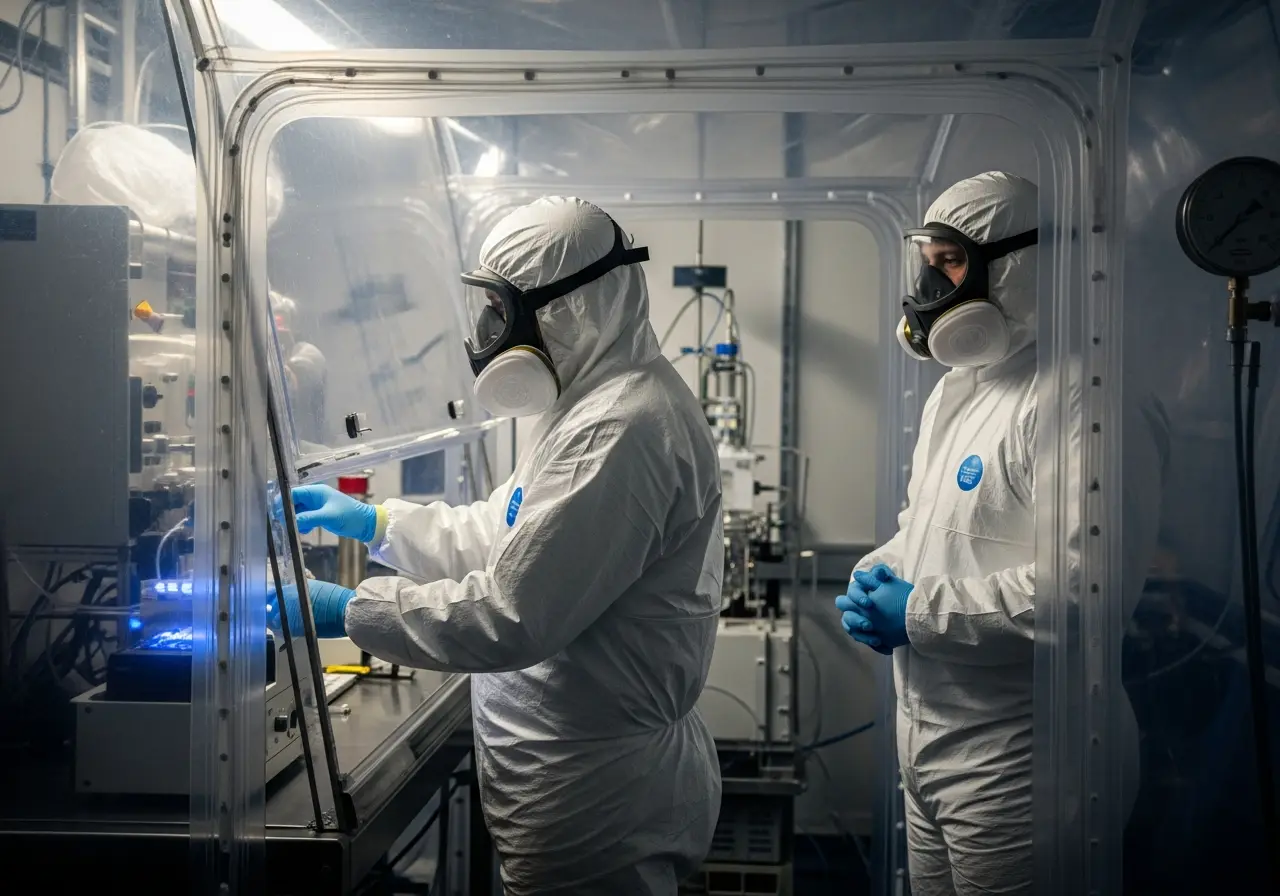
Work top-down through the hierarchy of controls — eliminate the hazard first, then fall back to procedures and PPE.
Contain the hazard and keep fibers and vapors out of the air.
Regulate the area, monitor exposure, and decontaminate.
Protect the respiratory system and skin.
Trained, accredited, and medically cleared workers are the backbone of preventing hazmat and asbestos exposure, because the hazards are invisible and every procedure must be performed correctly the first time.
OSHA Scan analyzes abatement and hazmat photos to flag removal without proper containment, dry methods where wet removal is required, workers without fit-tested respiratory protection or chemical PPE, and missing decontamination setups. Each finding cites the relevant OSHA standard and generates a corrective-action checklist covering containment, wet methods, and PPE — so a supervisor can catch an exposure-causing setup from a photo before fibers or vapors are released.
No level of asbestos exposure is considered completely safe. OSHA sets a permissible exposure limit to reduce risk, but even brief or low-level exposure can eventually cause disease. Because the fibers are permanent once inhaled and disease can take decades to appear, the goal is to prevent exposure entirely through containment and respiratory protection.
Wetting asbestos-containing material keeps fibers from becoming airborne when it is disturbed. Dry removal releases enormous quantities of fibers, so OSHA requires wet methods for most abatement. Wetting, combined with sealed containment and HEPA filtration, dramatically reduces the concentration workers and occupants breathe.
A decontamination unit is a series of chambers workers pass through when leaving an asbestos or hazmat work area — typically a dirty room, shower, and clean room. It prevents workers from carrying fibers or contamination out on their bodies and clothing into clean areas, vehicles, and their homes.
A respirator only protects the wearer if it seals against the face. Fit testing confirms the specific make, model, and size seals properly for that individual. Without a proper seal, contaminated air leaks in around the edges, so OSHA requires fit testing, medical clearance, and a written respiratory-protection program.
Start by identifying the chemicals through SDS, then control exposure with ventilation and containment, restrict the area, and use PPE selected for the specific hazard — including chemical-resistant gloves, suits, and appropriate respirators. Because many chemicals are absorbed through skin, full skin protection and careful doffing are as important as respiratory protection.
Yes. OSHA requires medical surveillance for workers exposed to asbestos above certain thresholds and for many hazardous chemicals. Periodic medical exams help detect early effects, ensure workers are fit to wear respirators, and create a baseline — an important protection given the long latency of these diseases.
Asbestos and hazardous-material work is regulated by both OSHA and the EPA, and violations carry some of the steepest penalties in the industry. OSHA can assess penalties well into six figures for willful or repeat violations of the asbestos standard, and each day of continued exposure can be treated as a separate violation. Beyond OSHA, the EPA enforces the Clean Air Act NESHAP rules for asbestos, and improper handling or disposal can bring civil penalties and even criminal prosecution with prison time for knowing violations. States that run their own programs frequently add license revocation. Because the consequences reach far beyond fines — including long-tail personal-injury liability that can surface decades later — the cost of doing the job correctly with containment, monitoring, and accredited workers is always a fraction of the cost of a single enforcement action or lawsuit.
Asbestos workers and supervisors must complete initial accredited training under the AHERA model — typically a multi-day course for workers and a longer one for supervisors — and then pass an annual refresher every year to keep their accreditation valid. Respirator users need annual fit testing and periodic medical evaluations to remain cleared. Workers on chemical hazmat sites generally require HAZWOPER training at the level matching their role, with an eight-hour refresher every twelve months. Hazard-communication training must be provided at initial assignment and whenever a new chemical hazard is introduced. Because certifications lapse and crews change, competent employers track every worker's training and medical-clearance dates and pull anyone whose credentials have expired before they enter a regulated area.
An emergency plan for hazmat and abatement work must address the specific materials on site and the ways they can hurt people quickly. It should cover evacuation routes and containment-breach procedures, spill and release response with the right absorbents and neutralizers on hand, chemical exposure first aid including emergency eyewash and deluge showers within the required travel distance, and clear steps for medical treatment that inform responders exactly which substance was involved. For chemical work, coordinate with the local fire department and provide SDS access. The plan must name who is authorized to stop work, how to account for everyone, and how to decontaminate injured workers without spreading contamination. Workers should be drilled on it before the job, not handed a binder they have never opened.
Regulated areas require continuous oversight rather than a single check. The competent person should inspect containment integrity, negative-air pressure, and decontamination setups at the start of every shift and monitor them throughout the day, because a torn barrier or failed HEPA unit can compromise the whole job in minutes. Airborne fiber and chemical concentrations must be sampled on the schedule the exposure assessment requires, with results reviewed promptly. Equipment such as HEPA vacuums, respirators, and air monitors needs documented pre-use inspection. At project close, clearance air sampling confirms the area is safe before the containment comes down. Every inspection should be logged with date, findings, and corrective actions so the record demonstrates continuous compliance if an agency audits the project later.
Run through this before, during, and after every job.
15 more checklist points are waiting. Register with your email to reveal every item and download the complete OSHA compliance checklist as a printable PDF. Free, and it only takes a few seconds.
Already have an account? Sign in
A contractor was hired to remove asbestos pipe insulation during a building renovation. Facing a tight schedule, the crew began removing the insulation without building a sealed containment or setting up negative-air filtration.
Asbestos fibers were released and spread through the building's corridors and HVAC system, exposing not only the workers but occupants who had no idea abatement was underway. The uncontained release turned a routine removal into a costly, building-wide contamination event.
The contractor rebuilt its program around sealed containments, negative-air HEPA filtration, mandatory wet methods, fit-tested respirators, and full decontamination for every asbestos job. It adopted OSHA Scan to photo-verify containment and respiratory protection before removal began.
Subsequent projects passed clearance air sampling with fibers below detectable limits, and the contractor recorded no further uncontained releases. Its documented, license-compliant process helped it win sensitive institutional abatement contracts.
Snap a photo of the job site, and the AI categorizes findings against OSHA standards in seconds.
Each finding includes consistent corrective actions and structured JHA outputs. Check items off as your crew resolves them.
Build a searchable chemical library from label photos. Review manufacturer SDS matches when available and follow the status of missing documents.
Missing-document requests enter a review queue; they do not automatically contact suppliers.
Invite admins, managers, and supervisors with role-based access that keeps the right people in control.
A qualified person must review AI-flagged items before making safety decisions. Do not replace required comprehensive safety walkthroughs with AI reports. Features, limits, and downloads depend on your account’s plan and permissions.
OSHA Scan reads a single photo. That makes it fast and easy for anyone on site — but it also means it has real limits. Here's an honest look at both.
Reviewed by OSHA Scan Editorial
This content is produced by the OSHA Scan Editorial team and reviewed with AI assistance. It is general safety information, not legal or compliance advice. OSHA Scan is an independent tool and is not affiliated with, endorsed by, or certified by OSHA or the U.S. Department of Labor.
Upload a photo of your hazmat and asbestos removal job site and get an instant, OSHA-cited hazard report.
Start your free trial