
Free Emergency Planning Resource

Transportation, Fleet & Depot Emergency Action Plan

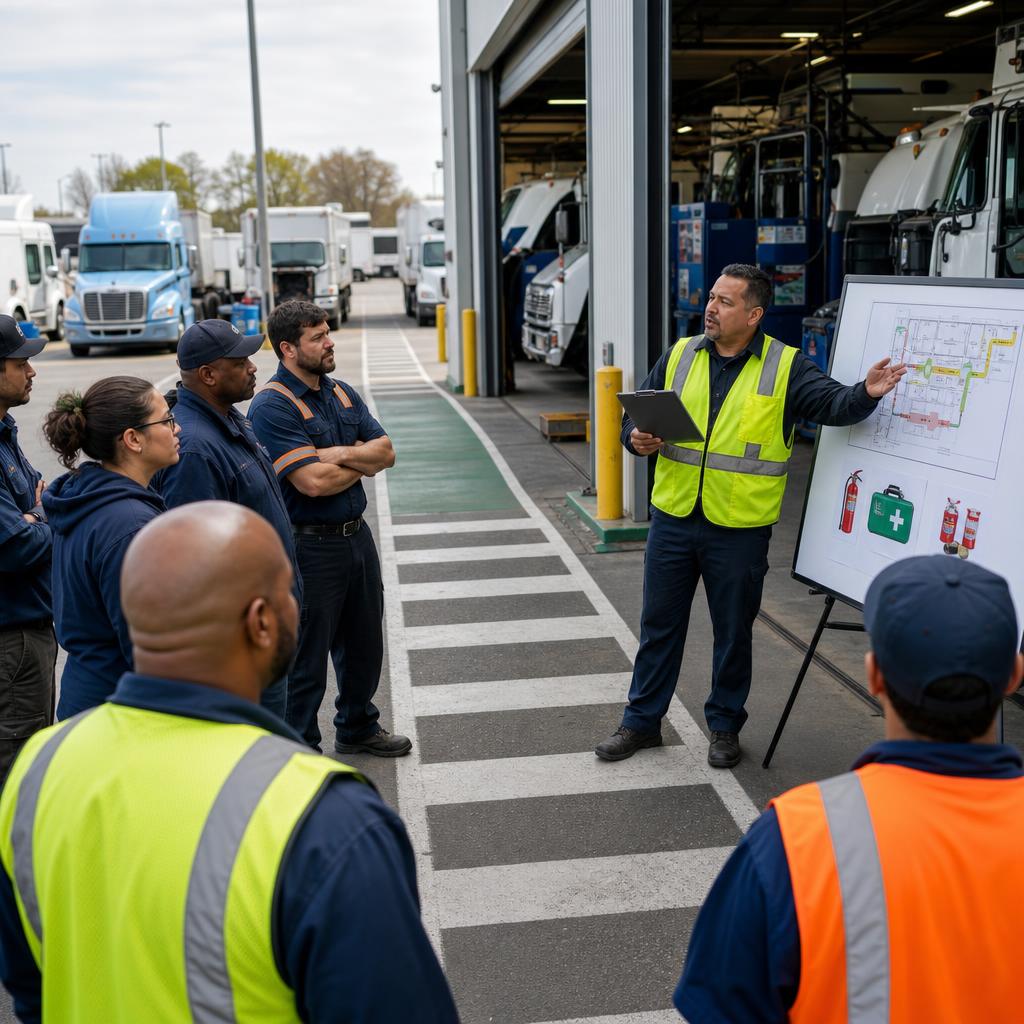
Transportation depots involve heavy vehicle traffic, fueling stations, maintenance bays, and hazardous materials. This EAP focuses on yard safety, hazardous spills, and isolating incidents to prevent catastrophic damage.

Review and adapt this starting point for your workplace before use.
Transportation & Fleet workplace emergency action plan
PreviewPreviewPreview

Emergency Action Plan

TRANSPORTATION & FLEET FACILITY / SITE

Site Name:
Site Address:
Date Updated:
Plan Coordinator:

Report an emergency

  1. Activate the facility alarm or internal emergency notification system.
  2. Call 911 for an immediate threat to life, fire, or another emergency requiring public responders.
  3. Give the site name, exact address, incident location, nature of the emergency, known hazards, and a callback number.
  4. Notify the Plan Coordinator named above.

1Potential Emergencies & Scenarios

Vehicle / Equipment Fire

Evacuating the vehicle, attempting to extinguish only if small and safe (using onboard extinguisher), and clearing adjacent vehicles.

Hazardous Material Spill (Fuel/Freight)

Isolating the area, eliminating ignition sources when safe, notifying trained spill responders, and using spill-control materials only within employee training and exposure limits.

Yard Pedestrian Accident

Halting all yard traffic, securing the scene, and calling EMS.

Maintenance Bay Emergency

Response to collapsed lifts, tire explosions, or chemical/welding fires in the shop.

2Roles & Responsibilities

Dispatch / Yard Manager

  • Halt all incoming/outgoing traffic.
  • Call 911.
  • Coordinate evacuation of the yard and shop.

Shop Foreman

  • Ensure maintenance bays are evacuated.
  • Perform only assigned, site-specific critical shutdowns when safe.
  • Account for mechanics.

Drivers / Operators

  • Follow the fleet's validated vehicle-securing procedure only when safe.
  • Use the designated safe evacuation route.
  • Report hazardous freight if involved.

3Alarm & Communication

  • Primary Alarm: [Air horn or yard-wide siren].
  • Radio: 'Emergency Traffic Only' broadcast on all yard/dispatch channels.
  • Drivers on the road must be notified via telematics/dispatch if the yard is closed due to an emergency.

4Evacuation & Shelter

  • Evacuate via marked pedestrian walkways.
  • Do NOT run between parked trailers or moving vehicles.
  • Primary Assembly Area: [e.g., Outside the main dispatch office / Front security gate].

5Accountability

  • Dispatch will account for drivers currently in the yard.
  • The Shop Foreman will account for all maintenance personnel.
  • Report missing persons to the Yard Manager immediately.

6Assistance & Rescue

  • Call emergency services and provide care only within employee training and dispatcher instructions.
  • Protect the scene from additional vehicle movement and communicate known hazards to responders.

7Critical Shutdown

  • Use a fueling-island emergency shutoff only if the site's procedure, training, and conditions make it safe to do so.
  • Turn off vehicles and follow the fleet's emergency key-control procedure; do not move vehicles unless authorized.
  • Only trained, authorized employees may perform site-specific critical shutdowns when safe; do not delay evacuation.

8Training & Drills

  • Train all staff on yard pedestrian safety and emergency stop locations.
  • Conduct and document drills at a frequency appropriate to the facility and applicable local requirements.
  • Drivers must be trained on in-cab emergency procedures (extinguishers, triangles, flares).

9Emergency Contacts

Emergency Services

911

Facility Manager

Maintenance Lead

Safety Coordinator

Customize before use. This template is a starting point, not legal advice, and does not guarantee OSHA compliance. The employer is responsible for ensuring the completed plan reflects the site's actual layout, hazards, alarms, and assigned duties.

Beyond the Template: Transportation & Fleet Emergency Planning

Practical steps to adapt this OSHA EAP framework for your site's specific hazards, shift patterns, and personnel.

Phase 01

Fleet Emergency Planning Across Yard, Shop, and Road

A transportation workplace emergency plan should distinguish fixed-facility EAP procedures from driver and vehicle procedures used away from the depot. Yard movement, fueling, maintenance, hazardous freight, weather, and changing vehicle locations create interconnected but different response needs.

Key Action Items

  • Map pedestrian routes, gates, dispatch, shops, pits or lifts, wash areas, fueling, parking, trailer storage, and responder access.
  • Assess vehicle fire, fuel or cargo release, collision, shop fire, severe weather, utility loss, and site-specific security events.
  • Determine how alarms reach mechanics, yard personnel, office staff, visiting drivers, and employees inside vehicles.
  • Protect assembly areas from moving traffic, smoke, releases, fuel installations, unstable vehicles, and emergency apparatus routes.
  • Coordinate the OSHA EAP with applicable company, vehicle, cargo, transportation, and local emergency procedures.
Phase 02

Implement a Depot Evacuation Plan Without Creating Traffic

Implementation depends on controlling movement and communicating one safe course of action across dispatch, yard, and maintenance operations. Assign duties to trained employees and validate equipment or fuel actions against current conditions, manufacturer instructions, site procedures, and local requirements.

Key Action Items

  • Define who halts dispatch or gate flow, reports the emergency, sounds alarms, meets responders, and accounts for each work group.
  • Walk pedestrian evacuation paths during representative parking, loading, fueling, and shift-change conditions.
  • Link driver status, shop rosters, visitor logs, contractor records, and yard check-in to the accountability process.
  • Specify when authorized employees may secure vehicles, lifts, chargers, utilities, or fueling systems without delaying evacuation.
  • Provide a dispatch method for drivers approaching a closed or hazardous depot and a validated alternate reporting process.
Phase 03

Fleet and Maintenance EAP Gaps to Correct

Fleet plans can become a mix of road rules and facility instructions with no clear trigger for either. Review the emergency action plan template by location, shift, role, and incident so employees are not asked to improvise around moving equipment or hazardous materials.

Key Action Items

  • The roster shows assigned drivers but not who is on the road, in the yard, off duty, riding along, or working for a contractor.
  • Evacuation directs people through active vehicle lanes or an assembly area used for staging arriving trucks.
  • Fuel-spill language asks untrained employees to control a release instead of isolate, report, and follow validated procedures.
  • Vehicle or shop-fire instructions imply extinguisher use without designated training, safe conditions, and a maintained escape option.
  • After-hours staff lack alarm access, facility details for emergency callers, or a current contact authorized to coordinate.
Phase 04

Customize Fleet Emergency Instructions by Location

A transportation EAP template should separate depot evacuation procedures from instructions for terminals, customer sites, roadside events, and drivers approaching the facility. Location-based action cards can clarify who to contact and which company procedure applies without asking drivers or mechanics to perform spill, fire, medical, or rescue work beyond their training.

Key Action Items

  • Create distinct, approved instructions for the yard, maintenance shop, fueling area, office, remote parking, and relevant off-site situations.
  • List the location details dispatchers or employees need to give responders, including controlled entrances and known vehicle or cargo hazards.
  • Define how dispatch redirects approaching drivers when a gate, yard, fueling area, or access road is unavailable.
  • Reference vehicle, cargo, customer-site, and transportation procedures from the facility plan while identifying which document controls each setting.
  • Provide accessible action information through approved in-cab, mobile, radio, or posted methods suited to the operation and current conditions.
Phase 05

Coordinate and Record Fleet EAP Updates

Fleet emergency action plan maintenance should connect dispatch, shop, yard, safety, facilities, and driver records so a change in one function reaches the others. Documented review is especially important when routes, gates, fuel systems, cargo types, contractors, telematics, or operating hours alter notification, evacuation, or accountability.

Key Action Items

  • Assign a plan owner and reviewers who understand facility operations, driver communication, maintenance systems, hazardous materials, and local coordination.
  • Screen fleet additions, fueling changes, charger installations, yard redesigns, customer contracts, and temporary projects for EAP impacts.
  • Reconcile driver status tools, shop rosters, visitor records, and contractor check-in when evaluating accountability across shifts.
  • Log drills and events by location and operating period, then assign, verify, and communicate corrective actions to affected groups.
  • Keep dispatch contacts, responder access details, controlled maps, and driver instructions synchronized while retaining superseded versions appropriately.
OSHA Scan Safety

Check Your Fleet EAP From Yard to Shop

OSHA Scan offers an AI-assisted preliminary second look that can help operations and safety leaders find issues to investigate in a depot plan. Confirm findings through qualified review, current company procedures, applicable requirements, and local responders.

Try Free AI Scan

No credit card required. Fast and free.

Explore More Industry EAP Templates

Construction

Active construction sites present rapidly changing conditions, multiple contractors working simultaneously, and severe hazards like heights, trenches, and heavy equipment. This EAP provides a framework for coordinating emergency response across trades.

Manufacturing

Manufacturing facilities house complex machinery, hazardous chemicals, and high-voltage equipment. This EAP focuses on safe shutdown procedures, chemical release response, and orderly evacuation from expansive plant floors.

Warehousing & Logistics

Warehouses feature high-racked storage, continuous forklift traffic, and large open floor plans. This EAP addresses the unique challenges of rack collapses, pedestrian-vehicle collisions, and massive facility evacuations.

Healthcare

Healthcare facilities must protect employees and may need to coordinate patient movement, treatment equipment, and visitor communication. This EAP provides a starting framework that must be validated against the facility's emergency, clinical, and local requirements.

Hospitality & Restaurants

Hotels and restaurants accommodate large numbers of transient guests who are unfamiliar with the building layout. This EAP focuses on kitchen fire safety, guest notification, and safely clearing public spaces.

Retail

Retail environments involve managing crowds of customers, securing cash and assets, and ensuring clear exit routes through heavily merchandised floors. This EAP focuses on crowd management, fire response, and active threat protocols.

Offices & Corporate

Office emergencies generally involve high-density populations in multi-story buildings. This EAP focuses on orderly stairwell evacuation, avoiding elevators, and accounting for employees and visitors.

OSHA Scan

Keep your EAP relevant with continuous hazard detection

An EAP only works if you know what hazards are actually on your site. Use OSHA Scan's AI to catch changing conditions before they become emergencies.

Start your free trial