
1
Set the scene
Start with context
Fill the frame
2–3 ft for close-ups; keep ladders, cords and workers fully in view.
Points of operation, pinch points, and moving-parts protection
Unguarded and inadequately guarded machinery is one of OSHA's most frequently cited hazards and a leading cause of workplace amputations. Rotating shafts, ingoing nip rollers, and points of operation on saws, presses, grinders, conveyors, and augers can catch a hand faster than a worker can pull it back. OSHA Scan surfaces missing and defeated guards from a single photo so you can fix them before someone is pulled in.
Free · No account needed to scan · Results in seconds
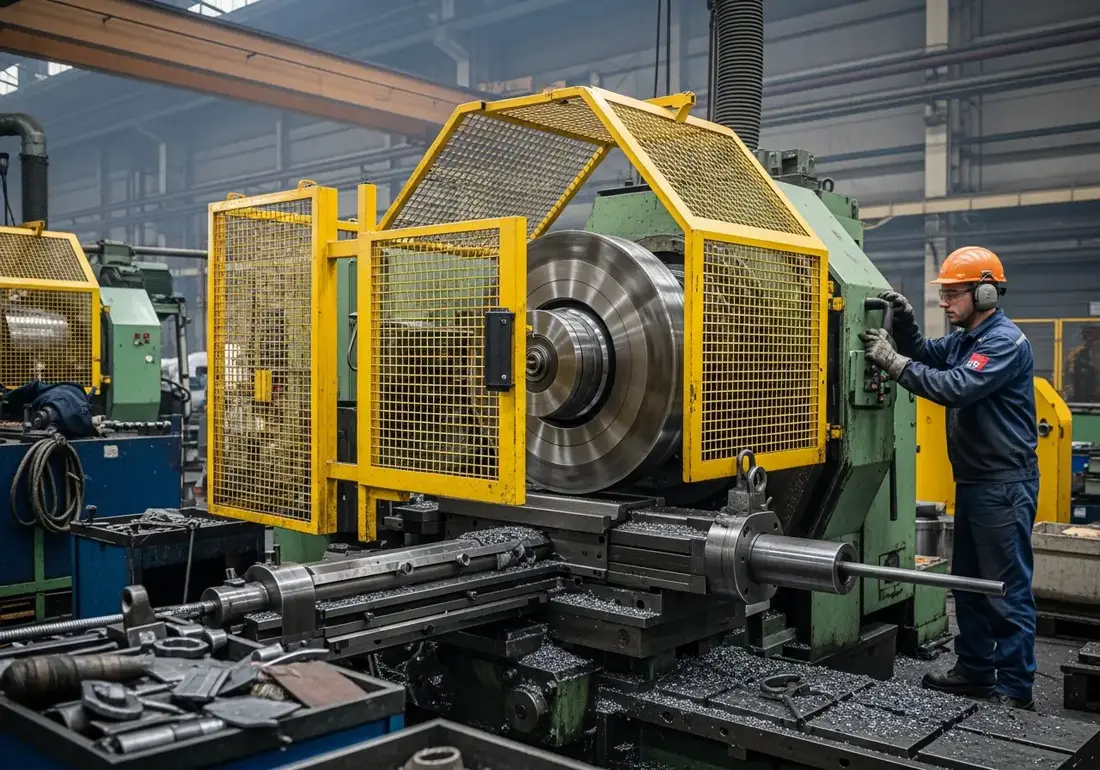
amputations, lacerations, and crushing injuries a year from machinery
amputations reported to OSHA annually under the severe-injury rule
machine guarding is a perennial OSHA most-cited standard
how fast a nip point can pull in a hand or sleeve
Upload a real job-site photo and OSHA Scan detects visible machine guarding hazards in seconds — no account needed to run your first scan.
Use the real site or facility name. If you save the scan after signup, it becomes the report name.
Three angles, one deeper scan
Only the wide shot is required — every extra angle gives the AI more places to look.
Required: Set the scene — one wide shot lets the AI sweep the whole area at once
Stand at the entry point and capture corner to corner: floors, ladders, scaffolds, and everyone at work
Drop a job-site photo or walkthrough video
Click to upload, drag & drop, or snap a photo on site. Photos scan free in about 15 seconds — no signup, no card. Video walkthroughs (up to 3 min) run on a free account.
Small habits, sharper scans
Set the scene
Start with context
Fill the frame
2–3 ft for close-ups; keep ladders, cords and workers fully in view.
Capture clearly
Make the frame usable
Light it right
Keep the sun or lights behind you — glare and shadows hide hazards.
Tap to focus
Tap the hazard on screen and hold still one second — blur can't be flagged.
Choose the useful view
Give the AI room to understand
Go landscape
Turn your phone sideways — a wider frame catches more of the scene.
Only upload photos you have permission to use, and avoid images showing personal, customer, or confidential information. Demo photos and results are held privately for up to 48 hours so you can save them to a free account; unclaimed photos are deleted automatically. Results are an AI-assisted preliminary review, not an official OSHA determination.
Here is what an OSHA Scan report looks like for machine guarding hazards. It is an illustrative example built from this trade's hazards — clearly marked, not live scan data.
Compliance score
64
Lower means more potential hazards found
3 potential hazards found
Reaching into an unguarded press
Possibly related to General requirements for all machines (29 CFR 1910.212)
Observed condition: An operator reaches into the point of operation of a mechanical power press to clear a stuck part without stopping the machine.
Corrective action: Install fixed guards over points of operation, power-transmission parts, and rotating shafts
High confidence
Loose sleeve on a rotating shaft
Possibly related to Mechanical power-transmission apparatus (29 CFR 1910.219)
Observed condition: A maintenance worker leans over an unguarded rotating shaft on a piece of power-transmission equipment.
Corrective action: Use interlocked guards that stop the machine whenever the guard is opened
Medium confidenceNot fully clear from the photo — verify on site.
Ingoing nip on a conveyor
Possibly related to The control of hazardous energy (lockout/tagout) (29 CFR 1910.147)
Observed condition: A worker tries to free jammed material at the head pulley of a running conveyor.
Corrective action: Add presence-sensing devices such as light curtains and safety mats at danger zones
High confidence
Illustrative AI-assisted workflows. Review the findings; they are not a compliance certification.
Machine guarding hazards arise wherever a machine has moving parts a worker can reach: the point of operation where the tool acts on the material, power-transmission components such as belts, pulleys, gears, chains, and rotating shafts, and other moving parts including reciprocating, transversing, or rotating elements. When these are exposed, a hand, sleeve, glove, or strand of hair can be caught in an instant.
Primary OSHA standard: 29 CFR 1910.212
Machine guarding hazards arise wherever a machine has moving parts a worker can reach: the point of operation where the tool acts on the material, power-transmission components such as belts, pulleys, gears, chains, and rotating shafts, and other moving parts including reciprocating, transversing, or rotating elements. When these are exposed, a hand, sleeve, glove, or strand of hair can be caught in an instant.
The most dangerous zones are pinch points and nip points, where two parts move together or where a rotating part meets a fixed one, and ingoing nip rollers that draw material — and anything touching it — into the machine. Points of operation on saws, presses, grinders, and shears cut, shape, or crush the workpiece, and they cut, shape, or crush flesh with equal indifference. Rotating shafts and augers can catch loose clothing and wrap a limb before the operator can react.
Beyond entanglement and amputation, guarding also controls secondary hazards: flying chips, sparks, and broken tooling ejected from the point of operation, and the release of stored energy during service. Guards can be fixed, interlocked, adjustable, or self-adjusting, and they are often paired with two-hand controls, presence-sensing devices such as light curtains, and emergency stops. During setup, cleaning, and maintenance, guarding alone is not enough — the machine must be de-energized and locked out.
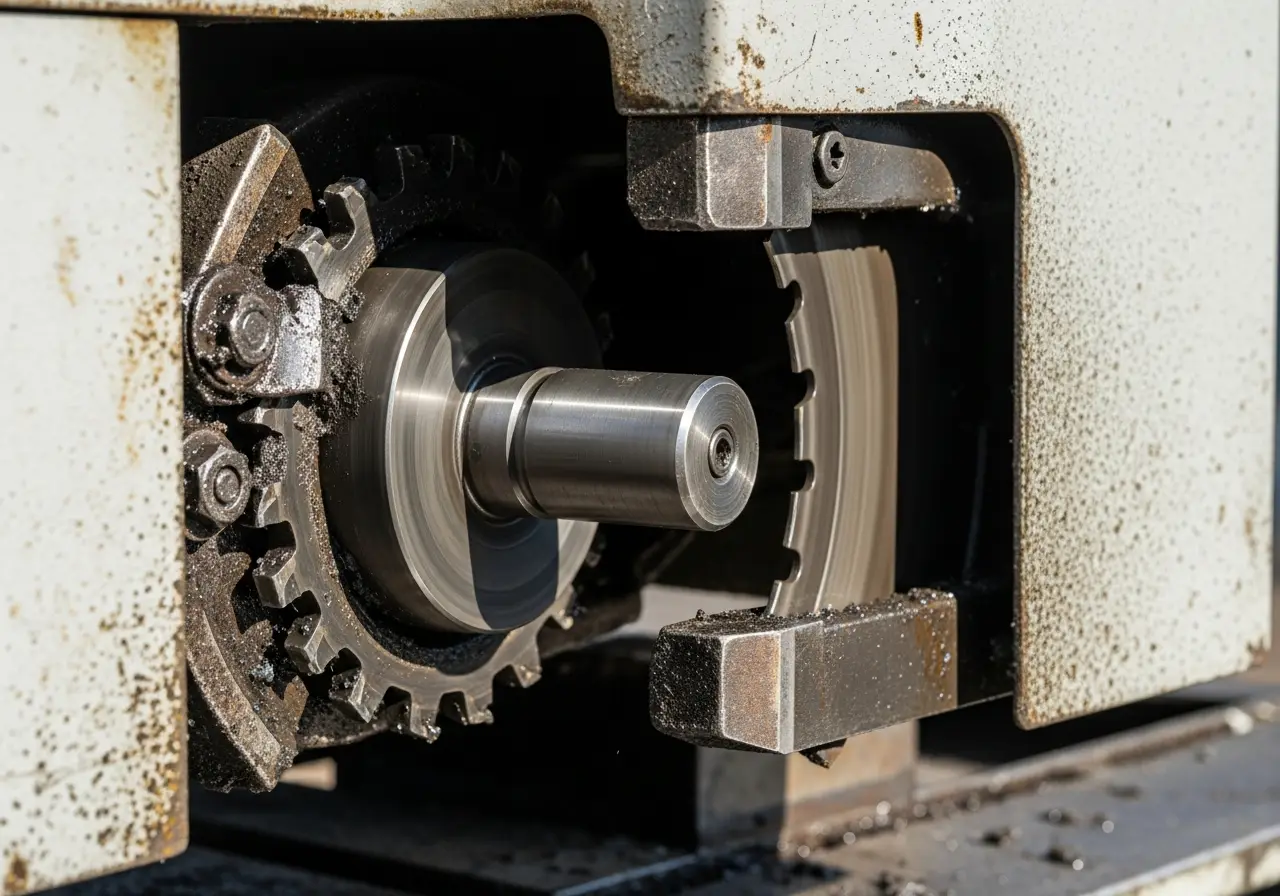
Machine guarding and lockout/tagout are consistently among OSHA's most-cited standards, and amputations must be reported within 24 hours. Willful and repeat guarding violations regularly reach into six figures per instance.
A single contact with an unguarded point of operation can amputate fingers or a hand in a fraction of a second. Crushing and degloving injuries are often permanent, disabling, and career-ending.
An amputation triggers an OSHA inspection, halts production on the machine, drives up EMR and workers' compensation costs, and can shut down a line during the investigation.
Customers and general contractors increasingly audit machine safety before awarding work. A documented guarding program and detailed records win and keep contracts.
An operator reaches into the point of operation of a mechanical power press to clear a stuck part without stopping the machine. The ram cycles and amputates two fingers before the operator can pull back.
A maintenance worker leans over an unguarded rotating shaft on a piece of power-transmission equipment. A loose sleeve catches, wrapping the arm around the shaft and causing severe fractures and degloving.
A worker tries to free jammed material at the head pulley of a running conveyor. A gloved hand is drawn into the ingoing nip point between the belt and pulley, crushing the hand.
To speed up cleaning, an operator defeats the interlocked guard on a food-processing machine so it runs with the guard open. A hand enters the auger and is caught, causing a traumatic amputation.
A bench grinder is run with the wheel guard and tongue guard removed. The wheel shatters during use and fragments strike the operator in the face and chest, causing lacerations and an eye injury.
The federal regulations that govern machine guarding work.
Requires one or more methods of machine guarding to protect operators and other employees from hazards such as points of operation, ingoing nip points, rotating parts, flying chips, and sparks. Guards must be affixed and prevent the operator from having any body part in the danger zone during operation.
Requires guarding of belts, pulleys, gears, sprockets, chains, flywheels, shafting, and other power-transmission components. Exposed moving parts seven feet or less from the floor or working platform must be guarded to prevent contact.
Requires energy sources to be isolated and locked out before servicing or maintenance where unexpected startup or release of stored energy could cause injury. Guards alone do not protect workers during setup, cleaning, and repair — the machine must be de-energized and verified.
Requires machine guards on point-of-operation, ingoing nip points, rotating parts, and flying chips or sparks, and mandates guarding of exposed moving parts such as belts, gears, and shafts on construction hand and power tools.
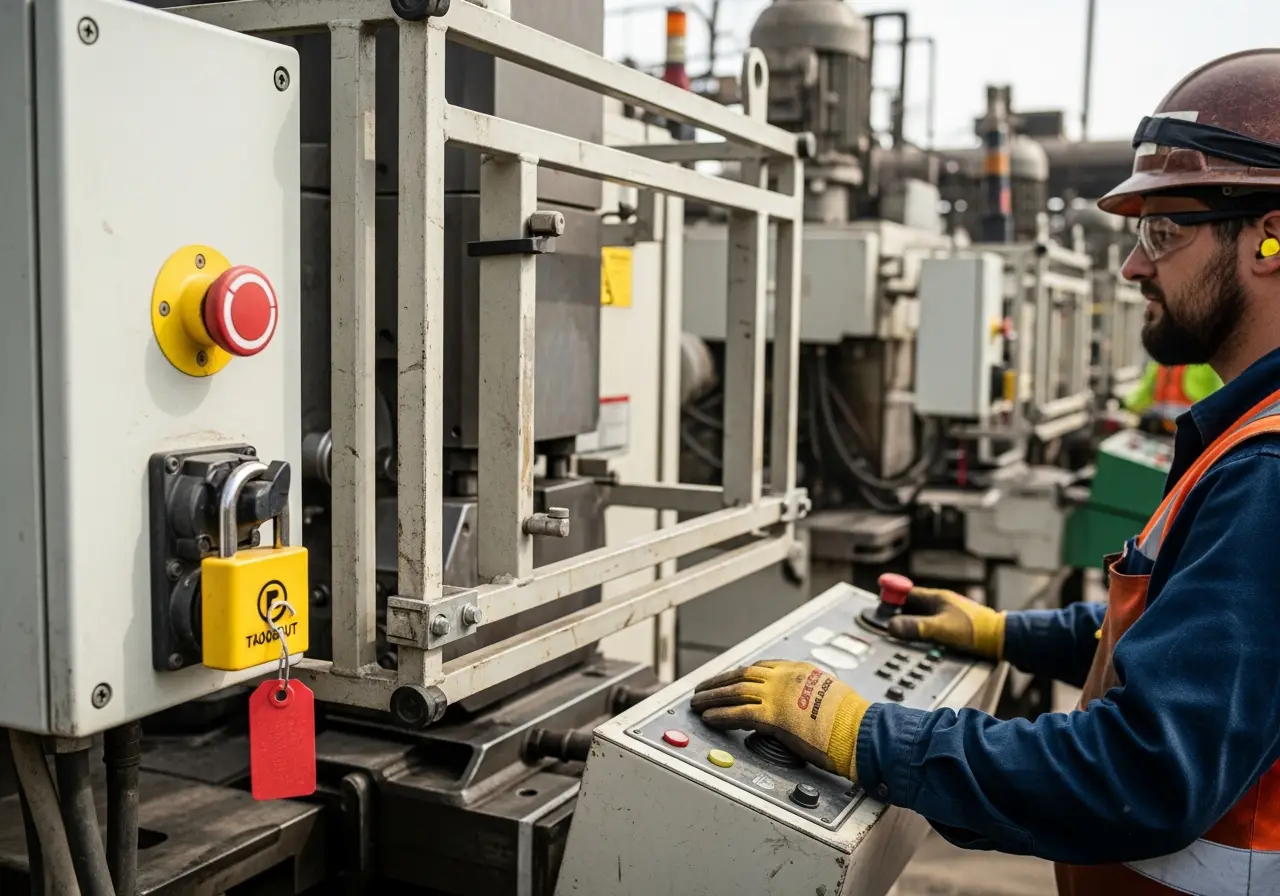
Work top-down through the hierarchy of controls — eliminate the hazard first, then fall back to procedures and PPE.
Design the hazard out at the machine before relying on procedures or PPE.
Back up guarding with rigorous, documented procedures and work practices.
PPE protects the worker when a hazard at the machine cannot be fully eliminated.
Only workers who are trained, tested, and demonstrably competent can recognize danger zones and operate and service machines safely.
OSHA Scan analyzes photos of machinery and work areas to flag common, visible guarding hazards: missing or removed point-of-operation guards, exposed belts, pulleys, gears, and rotating shafts, unprotected ingoing nip points on conveyors and rollers, bench grinders without wheel or tongue guards, defeated or propped-open interlocked guards, absent two-hand controls or light curtains, and blocked or missing emergency stops. It also spots warning signs of unsafe practice such as gloves and loose clothing near moving parts and machines running during a jam. Upload a photo and you get an instant report that cites the specific OSHA standard for each finding and generates a corrective-action checklist your crew can work through on site — no waiting for a scheduled audit.
The point of operation is the area of a machine where work is performed on the material — where a saw cuts, a press stamps, a grinder abrades, or shears cut. It is the most hazardous zone on most machines because the same forces that shape the workpiece can amputate or crush a hand, so it must be guarded so no body part can enter during operation.
A pinch point is any place where two machine parts move together, or a moving part moves past a fixed one, so a hand or clothing can be caught and crushed. A nip point, often called an ingoing nip, is where rotating parts such as rollers, belts and pulleys, or gears draw material inward and can pull in anything that touches them. Both must be guarded to prevent contact.
The primary types are fixed guards that permanently enclose a hazard, interlocked guards that stop the machine when opened, adjustable guards that the operator sets for the work, and self-adjusting guards that move with the stock. Guards are often combined with safeguarding devices such as two-hand controls, presence-sensing light curtains, and pullback or restraint devices.
Machinery moves far faster than human reaction time — a nip point or press can catch a hand in a fraction of a second, long before a careful worker can react. OSHA requires physical safeguarding precisely because attentiveness fails under fatigue, distraction, and production pressure. Guards remove the possibility of contact rather than relying on behavior.
Yes. Guards protect operators during normal running, but setup, cleaning, clearing jams, and maintenance often require reaching into danger zones or removing guards. During those tasks the machine must be de-energized, locked out, and verified under 29 CFR 1910.147, because guarding alone does not protect against unexpected startup or the release of stored energy.
It depends on the machine. Near rotating shafts, drills, lathes, and other equipment with catch points, gloves are dangerous because they can be snagged and pull the hand in, and OSHA and manufacturers often prohibit them at those machines. Gloves are appropriate for handling sharp or hot material away from moving parts, so follow the machine-specific procedure.
Under 29 CFR 1910.219, exposed moving power-transmission parts such as belts, pulleys, gears, and shafting that are seven feet or less above the floor or working platform must be guarded. Parts higher than that may not require guarding, but any component within reach of a worker, walkway, or platform generally must be safeguarded.
OSHA requires retraining whenever a worker's assignment changes, when a machine, guard, or procedure is modified in a way the original training did not cover, or when an audit or incident shows the worker is not following safe practices. Because guarding and lockout/tagout skills are perishable and the consequences of a lapse are amputations, most employers run at least annual refreshers on machine-specific hazards, guard function, and energy control. Every training event should be documented with the date, machine, topics, trainer, and the worker's demonstrated competency, so you can prove qualification during an inspection or after an incident. New hires and temporary workers should never operate or service a machine alone until a qualified person has verified their competency on that specific equipment in the field.
Guards, interlocks, two-hand controls, presence-sensing devices, and emergency stops should be checked before each shift or use, and any machine with a missing, damaged, or defeated guard should be taken out of service immediately. Beyond the daily check, run a documented weekly and monthly inspection that function-tests interlocks and e-stops, verifies fasteners and guard integrity, and confirms that no guard has been bypassed. Light curtains and other safety devices should be verified on the manufacturer's schedule and after any repair. Keeping a written inspection log turns these checks into evidence of a functioning safeguarding program, which matters both for OSHA compliance and for defending against liability after an incident. Photo-based tools such as OSHA Scan make it practical to capture and timestamp these inspections consistently across many machines.
Stop work immediately if a required guard is missing, damaged, removed, or bypassed, if an interlock, two-hand control, presence-sensing device, or emergency stop fails to function, or if a jam, cleaning, or repair would require reaching into a danger zone without locking out. Work should also stop when a machine is making abnormal noise, vibration, or is ejecting chips or sparks past its guarding, or when an untrained worker is found operating or servicing it. Every worker has the right and the responsibility to stop a job that feels unsafe without fear of reprisal. The cost of stopping a machine is trivial compared with an amputation or crushing injury, and a documented stop-work culture is one of the clearest signals to customers, general contractors, and insurers that a company manages machine risk seriously.
Run through this before, during, and after every job.
15 more checklist points are waiting. Register with your email to reveal every item and download the complete OSHA compliance checklist as a printable PDF. Free, and it only takes a few seconds.
Already have an account? Sign in
A metal-fabrication shop ran several mechanical power presses and a bank of bench grinders on a tight production schedule. Operators had grown used to reaching into presses to clear stuck parts and to running grinders after guards had been removed for a quick job.
An operator reached into an unguarded press to free a jammed blank while it was still cycling and lost two fingers. The OSHA inspection that followed found missing point-of-operation guards, defeated interlocks, and no functioning lockout/tagout program, resulting in citations and a production shutdown on the affected machines.
The shop retrofitted fixed and interlocked guards and light curtains on its presses, restored wheel and tongue guards on every grinder, built a written lockout/tagout program for all setup and jam clearing, and retrained operators on machine-specific hazards. It adopted OSHA Scan to photo-audit every machine at shift start and confirm guards and devices were in place.
In the two years that followed, the shop recorded zero amputations and no guarding-related recordable injuries. Workers' compensation costs and EMR fell as the record improved, and the documented safeguarding program helped the shop pass a major customer's supplier safety audit and win additional work.
Snap a photo of the job site, and the AI categorizes findings against OSHA standards in seconds.
Each finding includes consistent corrective actions and structured JHA outputs. Check items off as your crew resolves them.
Build a searchable chemical library from label photos. Review manufacturer SDS matches when available and follow the status of missing documents.
Missing-document requests enter a review queue; they do not automatically contact suppliers.
Invite admins, managers, and supervisors with role-based access that keeps the right people in control.
A qualified person must review AI-flagged items before making safety decisions. Do not replace required comprehensive safety walkthroughs with AI reports. Features, limits, and downloads depend on your account’s plan and permissions.
OSHA Scan reads a single photo. That makes it fast and easy for anyone on site — but it also means it has real limits. Here's an honest look at both.
Reviewed by OSHA Scan Editorial
This content is produced by the OSHA Scan Editorial team and reviewed with AI assistance. It is general safety information, not legal or compliance advice. OSHA Scan is an independent tool and is not affiliated with, endorsed by, or certified by OSHA or the U.S. Department of Labor.
Upload a photo of your machine guarding job site and get an instant, OSHA-cited hazard report.
Start your free trial