
1
Set the scene
Start with context
Fill the frame
2–3 ft for close-ups; keep ladders, cords and workers fully in view.
Solvent vapors, respiratory risk, and fire hazards
Solvents, isocyanates, and lead in paints and coatings cause respiratory disease, sensitization, and long-term harm — especially when spraying in enclosed spaces. OSHA Scan analyzes painting job-site photos to catch missing ventilation and respiratory protection before exposure builds.
Free · No account needed to scan · Results in seconds
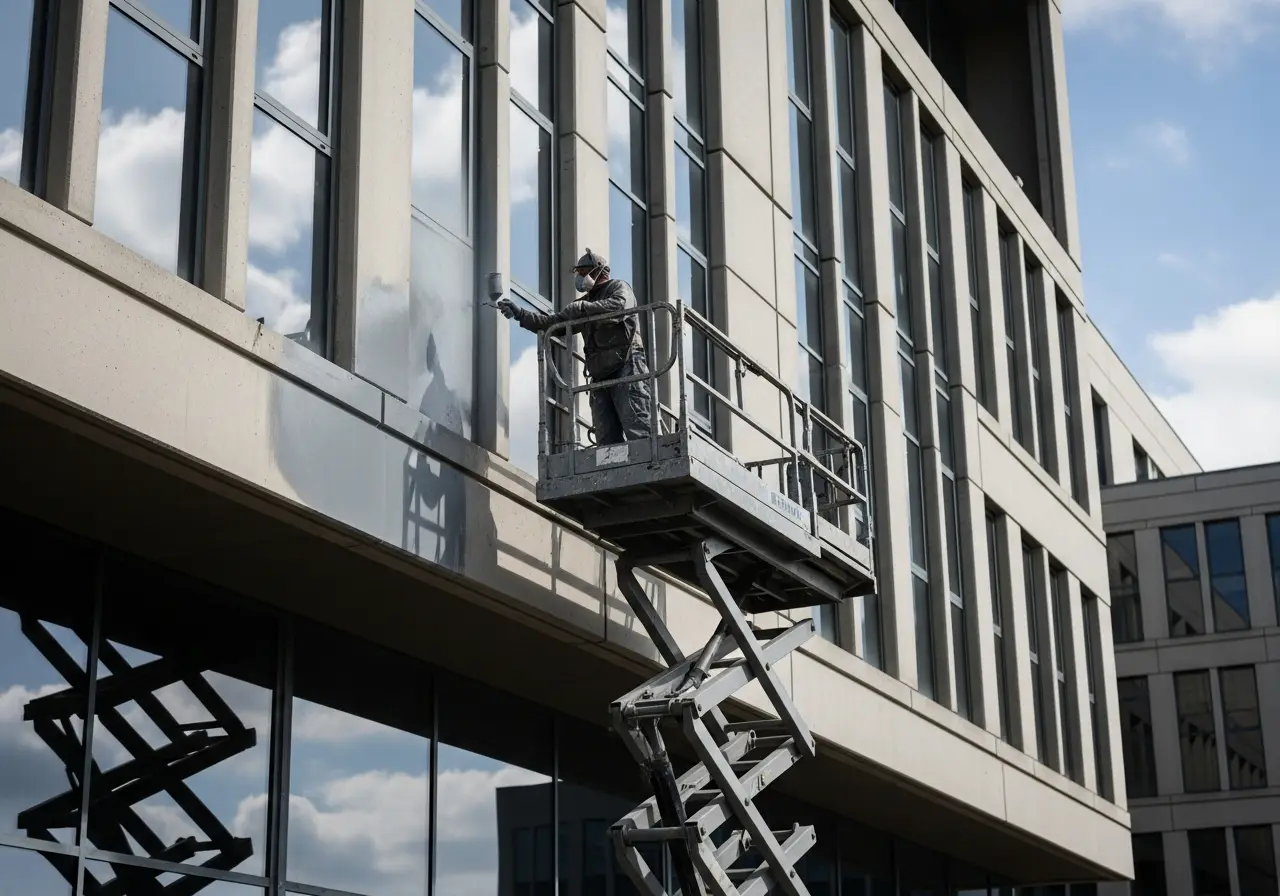
solvent vapors that damage lungs and nerves
solvent vapor can reach explosive levels indoors
pre-1978 paint is a serious neurotoxic hazard
in coatings cause occupational asthma
Upload a real job-site photo and OSHA Scan detects visible painting and coating hazards in seconds — no account needed to run your first scan.
Use the real site or facility name. If you save the scan after signup, it becomes the report name.
Three angles, one deeper scan
Only the wide shot is required — every extra angle gives the AI more places to look.
Required: Set the scene — one wide shot lets the AI sweep the whole area at once
Stand at the entry point and capture corner to corner: floors, ladders, scaffolds, and everyone at work
Drop a job-site photo or walkthrough video
Click to upload, drag & drop, or snap a photo on site. Photos scan free in about 15 seconds — no signup, no card. Video walkthroughs (up to 3 min) run on a free account.
Small habits, sharper scans
Set the scene
Start with context
Fill the frame
2–3 ft for close-ups; keep ladders, cords and workers fully in view.
Capture clearly
Make the frame usable
Light it right
Keep the sun or lights behind you — glare and shadows hide hazards.
Tap to focus
Tap the hazard on screen and hold still one second — blur can't be flagged.
Choose the useful view
Give the AI room to understand
Go landscape
Turn your phone sideways — a wider frame catches more of the scene.
Only upload photos you have permission to use, and avoid images showing personal, customer, or confidential information. Demo photos and results are held privately for up to 48 hours so you can save them to a free account; unclaimed photos are deleted automatically. Results are an AI-assisted preliminary review, not an official OSHA determination.
Here is what an OSHA Scan report looks like for painting and coating hazards. It is an illustrative example built from this trade's hazards — clearly marked, not live scan data.
Compliance score
64
Lower means more potential hazards found
3 potential hazards found
Spraying in an enclosed room
Possibly related to Respiratory protection (29 CFR 1910.134)
Observed condition: A painter sprays coating in a small, unventilated room without a supplied-air respirator.
Corrective action: Provide mechanical ventilation or spray booths that exhaust vapors and mist
High confidence
Isocyanate sensitization
Possibly related to Hazard communication (29 CFR 1910.1200)
Observed condition: A painter applies a two-part polyurethane coating without adequate respiratory protection and later develops occupational asthma triggered by any future exposure.
Corrective action: Use low-VOC and water-based coatings where feasible
Medium confidenceNot fully clear from the photo — verify on site.
Disturbing lead paint
Possibly related to Lead in construction (29 CFR 1926.62)
Observed condition: A worker dry-sands old exterior paint containing lead without controls, releasing lead dust that contaminates the site and is carried home on clothing.
Corrective action: Use wet methods and HEPA vacuums when disturbing lead paint
High confidence
Illustrative AI-assisted workflows. Review the findings; they are not a compliance certification.
Painting and coating hazards center on the chemicals that make paint work. Solvents and volatile organic compounds evaporate as paint dries and, when inhaled, cause dizziness, headaches, and nausea in the short term and respiratory, liver, kidney, and neurological damage over time. Two-part and specialty coatings often contain isocyanates, which are potent respiratory sensitizers that can cause occupational asthma after even a single significant exposure.
Primary OSHA standard: 29 CFR 1910.134
Painting and coating hazards center on the chemicals that make paint work. Solvents and volatile organic compounds evaporate as paint dries and, when inhaled, cause dizziness, headaches, and nausea in the short term and respiratory, liver, kidney, and neurological damage over time. Two-part and specialty coatings often contain isocyanates, which are potent respiratory sensitizers that can cause occupational asthma after even a single significant exposure.
Spray application dramatically increases the hazard by turning paint into a fine airborne mist that is easily inhaled and settles on skin. In enclosed spaces such as tanks, rooms, and stairwells, solvent vapors accumulate and can reach concentrations that both endanger health and become flammable or explosive around any ignition source.
Older structures add a lead hazard: paint applied before 1978 commonly contains lead, and sanding, scraping, or burning it releases lead dust and fumes that are neurotoxic, particularly dangerous when carried home to families. Skin contact with solvents and coatings causes dermatitis and allows some chemicals to be absorbed. Effective painting safety has to address ventilation, respiratory protection, fire control, and lead together.
OSHA regulates respiratory protection, hazard communication, and lead. Spray operations and lead work draw specific, enforceable requirements.
Isocyanate sensitization can end a career, and solvent and lead exposure cause lasting respiratory and neurological harm.
A fire from accumulated solvent vapor or a lead-contamination claim can be catastrophic for a painting business.
Contractors with proper ventilation, respiratory, and lead-safe practices qualify for regulated and institutional work.
A painter sprays coating in a small, unventilated room without a supplied-air respirator. Solvent mist and vapor build up, causing dizziness and risking an explosive atmosphere.
A painter applies a two-part polyurethane coating without adequate respiratory protection and later develops occupational asthma triggered by any future exposure.
A worker dry-sands old exterior paint containing lead without controls, releasing lead dust that contaminates the site and is carried home on clothing.
Vapors from solvent-based paint accumulate near a pilot light or electrical spark in a poorly ventilated space and ignite.
A painter repeatedly handles solvents and coatings without gloves, developing chemical dermatitis and absorbing chemicals through the skin.
The federal regulations that govern painting work.
Requires a written program, fit testing, and correct respirator selection for spray painting and solvent exposure.
Requires SDS, labeling, and training for the solvents, coatings, and chemicals painters use.
Governs work that disturbs lead paint, including exposure assessment, controls, hygiene facilities, and medical surveillance.
Sets ventilation, ignition-control, and fire-prevention requirements for spray finishing operations.
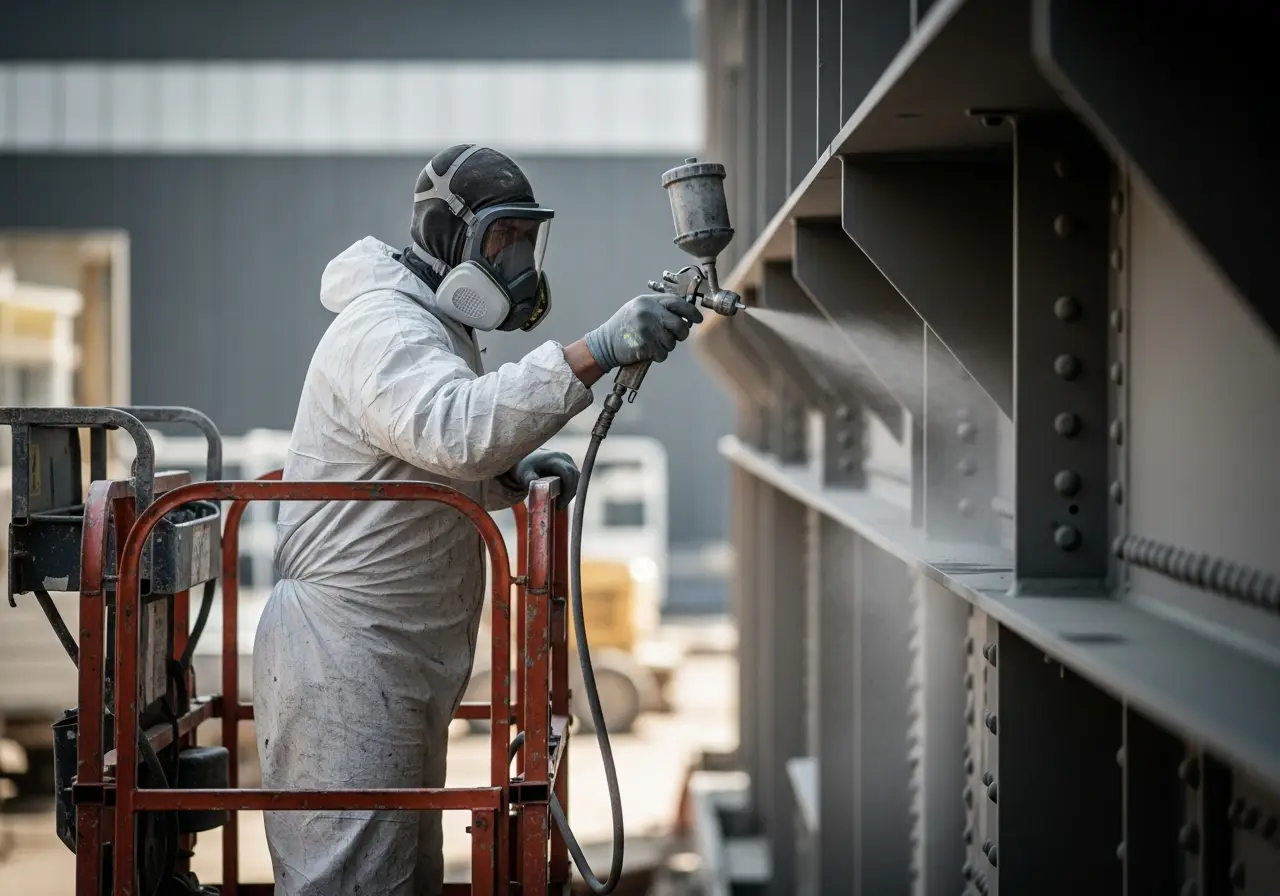
Work top-down through the hierarchy of controls — eliminate the hazard first, then fall back to procedures and PPE.
Remove vapors and mist and control lead dust at the source.
Assess exposures and plan for enclosed and lead work.
Protect the respiratory system and skin.
Painters who understand the chemistry of their coatings and are trained and cleared to use respirators are the surest defense against solvent, isocyanate, and lead exposure that builds up invisibly over a career.
OSHA Scan analyzes painting job-site photos to flag spraying without adequate ventilation, enclosed-space application without supplied-air respirators, dry sanding or scraping of likely lead paint without containment, and ignition sources near solvent vapors. Each finding cites the relevant OSHA standard and generates a corrective-action checklist covering ventilation, respiratory protection, and lead-safe practices — so a supervisor can catch an overexposure or fire setup from a photo before spraying begins.
Spray painting generates fine mist and high vapor concentrations, so it often requires a supplied-air respirator rather than a cartridge respirator — especially in enclosed spaces or with isocyanate coatings. Respirator selection must be based on the specific chemicals and exposure level under a written program with fit testing and medical clearance.
Isocyanates, found in many two-part polyurethane coatings, are powerful respiratory sensitizers. Once a worker becomes sensitized — which can happen after a single significant exposure — any future contact, even at very low levels, can trigger asthma attacks. This makes strict respiratory protection essential from the very first application.
Paint applied before 1978 should be presumed to contain lead unless testing proves otherwise. On such surfaces, OSHA's lead-in-construction standard applies: assess exposure, use lead-safe work practices with wet methods and containment, provide hygiene facilities, and prevent lead dust from being carried home to families.
Tanks, vessels, small rooms, and stairwells being painted can meet the confined-space definition, and solvent vapors can create a hazardous atmosphere. When that is the case, confined-space rules apply — atmospheric testing, ventilation, permits, and an attendant — in addition to respiratory protection.
Solvent vapors are flammable and accumulate in still, enclosed air. Provide ventilation to keep vapor below the lower explosive limit, remove or control ignition sources such as pilot lights, electrical sparks, and smoking, use explosion-proof equipment where required, and store and dispose of solvent-soaked rags in sealed metal containers.
Water-based and low-VOC paints reduce solvent-vapor and fire hazards and are preferable where feasible, but they are not hazard-free — some still contain additives, biocides, or trace solvents, and spraying any paint creates inhalable mist. Ventilation and appropriate respiratory protection are still needed, particularly for spray application.
Painting operations are commonly cited under the respiratory protection, hazard communication, and lead-in-construction standards, and penalties add up quickly. OSHA can assess several thousand dollars per serious violation and far more — into six figures — for willful or repeat violations, such as knowingly spraying isocyanate coatings without supplied-air respirators or disturbing lead paint without an exposure assessment. Lead cases are especially costly because each unprotected worker and each missing control can be a separate citation, and the EPA can add penalties for RRP violations on pre-1978 housing. A fire from accumulated solvent vapor can bring additional citations plus enormous property and liability losses. Against these numbers, the cost of ventilation, proper respirators, and lead-safe practices is minor, which is why documented compliance is far cheaper than a single serious incident or inspection.
Respirator users must be trained before first use and at least annually thereafter, with a medical evaluation to confirm they can safely wear the device and a fit test every year and whenever facial changes could affect the seal. Hazard-communication training is required at initial assignment and whenever a new coating or solvent introduces a hazard the worker has not been trained on. Painters who disturb lead paint need lead-awareness training, and firms doing renovation on pre-1978 housing generally need EPA RRP-certified renovators, which requires refresher training on a set cycle. Because coatings, crews, and job types change frequently, the best contractors track each painter's respirator, fit-test, medical, and lead-training dates and refuse to assign anyone whose certification has lapsed to a spray or lead job.
Painting crews need emergency procedures matched to the solvents and enclosed spaces they work in. For fire, that means fire extinguishers rated for flammable liquids on hand, a plan to shut off ignition sources, and safe storage and disposal of solvent-soaked rags in sealed metal containers to prevent spontaneous combustion. For overexposure, workers must recognize the signs of solvent intoxication — dizziness, headache, nausea — and know to evacuate to fresh air immediately, with someone trained to summon medical help. Enclosed and confined-space painting requires a rescue plan and an attendant, never a solo entry, because a collapsed worker cannot self-rescue. Eyewash and skin-flush provisions should be available for chemical splash. Crews should be briefed on these steps before the job and know exactly who is authorized to stop work.
Ventilation systems, spray booths, and respirators should be inspected before every shift, since a fouled filter, a failed exhaust fan, or a damaged respirator seal can turn a routine job into an overexposure. Airflow and booth performance should be checked against design specifications, and respirator cartridges changed on a schedule based on the exposure, not run until breakthrough. Lead-work areas need daily checks that containment and hygiene facilities remain intact. On a longer cycle, exposure assessments should be reviewed when coatings or methods change, and fit-test and calibration records verified monthly. Documenting each inspection with date and findings builds the record OSHA expects and helps catch a degrading control — such as a spray booth losing capture velocity — before it exposes a painter over the permissible limit.
Run through this before, during, and after every job.
14 more checklist points are waiting. Register with your email to reveal every item and download the complete OSHA compliance checklist as a printable PDF. Free, and it only takes a few seconds.
Already have an account? Sign in
An experienced painter was applying a two-part polyurethane coating inside a mechanical room. Because the job was small and he had worked with coatings for years, he used only a basic dust mask instead of a supplied-air respirator, and the room had little ventilation.
The coating contained isocyanates. Repeated exposure in the poorly ventilated room sensitized him, and he developed occupational asthma. From then on, even trace exposure triggered severe attacks, effectively ending his ability to work around such coatings.
The contractor mandated supplied-air respirators for all spray and isocyanate work, required ventilation and exposure assessment for enclosed application, added a written respiratory-protection program, and adopted OSHA Scan to photo-verify ventilation and respiratory protection before spraying.
The company recorded no further sensitization cases, and painters reported far fewer solvent-related symptoms after ventilation and respirator use became standard. The documented program qualified the contractor for regulated industrial coating projects.
Snap a photo of the job site, and the AI categorizes findings against OSHA standards in seconds.
Each finding includes consistent corrective actions and structured JHA outputs. Check items off as your crew resolves them.
Build a searchable chemical library from label photos. Review manufacturer SDS matches when available and follow the status of missing documents.
Missing-document requests enter a review queue; they do not automatically contact suppliers.
Invite admins, managers, and supervisors with role-based access that keeps the right people in control.
A qualified person must review AI-flagged items before making safety decisions. Do not replace required comprehensive safety walkthroughs with AI reports. Features, limits, and downloads depend on your account’s plan and permissions.
OSHA Scan reads a single photo. That makes it fast and easy for anyone on site — but it also means it has real limits. Here's an honest look at both.
Reviewed by OSHA Scan Editorial
This content is produced by the OSHA Scan Editorial team and reviewed with AI assistance. It is general safety information, not legal or compliance advice. OSHA Scan is an independent tool and is not affiliated with, endorsed by, or certified by OSHA or the U.S. Department of Labor.
Upload a photo of your painting job site and get an instant, OSHA-cited hazard report.
Start your free trial