
1
Set the scene
Start with context
Fill the frame
2–3 ft for close-ups; keep ladders, cords and workers fully in view.
Falls, chainsaw injuries, struck-by, and electrical contact
Arborists work at height, with running chainsaws, often within reach of energized power lines — a combination of hazards few other trades face together. OSHA Scan analyzes tree-work photos to catch missing fall protection, power-line proximity, and drop-zone problems before the cut is made.
Free · No account needed to scan · Results in seconds
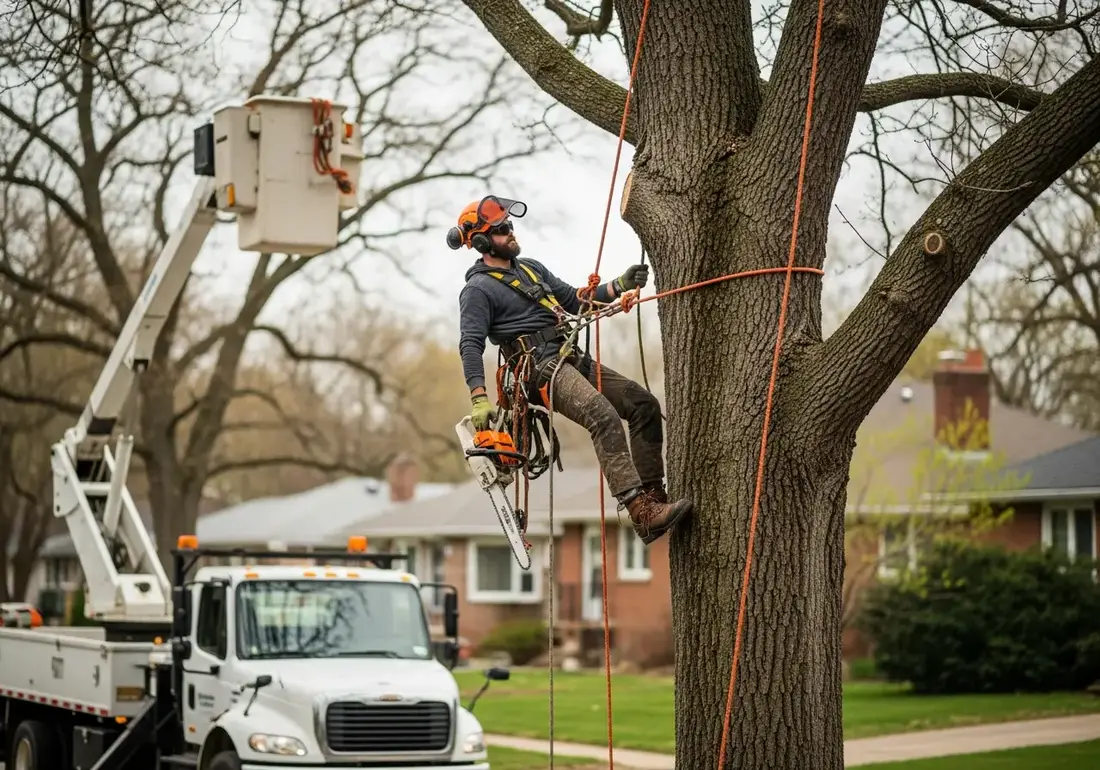
minimum clearance from power lines for most crews
tree-care worker deaths in the U.S. each year
kickback causes severe, sudden injuries
falling limbs are a leading arborist killer
Upload a real job-site photo and OSHA Scan detects visible tree service and arborist hazards in seconds — no account needed to run your first scan.
Use the real site or facility name. If you save the scan after signup, it becomes the report name.
Three angles, one deeper scan
Only the wide shot is required — every extra angle gives the AI more places to look.
Required: Set the scene — one wide shot lets the AI sweep the whole area at once
Stand at the entry point and capture corner to corner: floors, ladders, scaffolds, and everyone at work
Drop a job-site photo or walkthrough video
Click to upload, drag & drop, or snap a photo on site. Photos scan free in about 15 seconds — no signup, no card. Video walkthroughs (up to 3 min) run on a free account.
Small habits, sharper scans
Set the scene
Start with context
Fill the frame
2–3 ft for close-ups; keep ladders, cords and workers fully in view.
Capture clearly
Make the frame usable
Light it right
Keep the sun or lights behind you — glare and shadows hide hazards.
Tap to focus
Tap the hazard on screen and hold still one second — blur can't be flagged.
Choose the useful view
Give the AI room to understand
Go landscape
Turn your phone sideways — a wider frame catches more of the scene.
Only upload photos you have permission to use, and avoid images showing personal, customer, or confidential information. Demo photos and results are held privately for up to 48 hours so you can save them to a free account; unclaimed photos are deleted automatically. Results are an AI-assisted preliminary review, not an official OSHA determination.
Here is what an OSHA Scan report looks like for tree service and arborist hazards. It is an illustrative example built from this trade's hazards — clearly marked, not live scan data.
Compliance score
64
Lower means more potential hazards found
3 potential hazards found
Fall from a failed limb
Possibly related to Line-clearance tree trimming (29 CFR 1910.269)
Observed condition: A climber ties into a limb that looks sound but is internally decayed.
Corrective action: Use rated climbing and rigging systems with reliable anchors
High confidence
Chainsaw kickback aloft
Possibly related to Fall protection (29 CFR 1926.501)
Observed condition: A worker cutting overhead in an awkward position experiences saw kickback.
Corrective action: Use aerial lifts where they reduce climbing and positioning risk
Medium confidenceNot fully clear from the photo — verify on site.
Electrical contact through a limb
Possibly related to Logging operations (29 CFR 1910.266)
Observed condition: A non-qualified crew trims a tree touching an overhead line.
Corrective action: De-energize, cover, or maintain clearance from power lines
High confidence
Illustrative AI-assisted workflows. Review the findings; they are not a compliance certification.
Tree service combines several severe hazards in a single task. Workers climb or are lifted high into trees, so falls from height — from failed climbing systems, broken limbs, or aerial-lift incidents — are a leading cause of arborist fatalities. Unlike a fixed structure, a tree is a living, variable anchor whose strength is hard to judge.
Primary OSHA standard: 29 CFR 1910.269
Tree service combines several severe hazards in a single task. Workers climb or are lifted high into trees, so falls from height — from failed climbing systems, broken limbs, or aerial-lift incidents — are a leading cause of arborist fatalities. Unlike a fixed structure, a tree is a living, variable anchor whose strength is hard to judge.
Chainsaws add a constant cutting hazard. Kickback, contact with a moving chain, and cutting under tension can cause deep lacerations and amputations in an instant, often while the operator is aloft and off balance. Struck-by hazards are equally deadly: limbs, tops, and whole trees can fall unpredictably, and workers on the ground and in the tree are both at risk.
The defining hazard for many tree crews is electricity. Trees frequently grow into or near overhead power lines, and a limb, a saw, or the worker contacting an energized conductor — directly or through the tree — can be instantly fatal. Only qualified line-clearance arborists may work close to energized lines. Add outdoor exposure and heavy equipment like chippers, and it is clear why layered controls are essential.
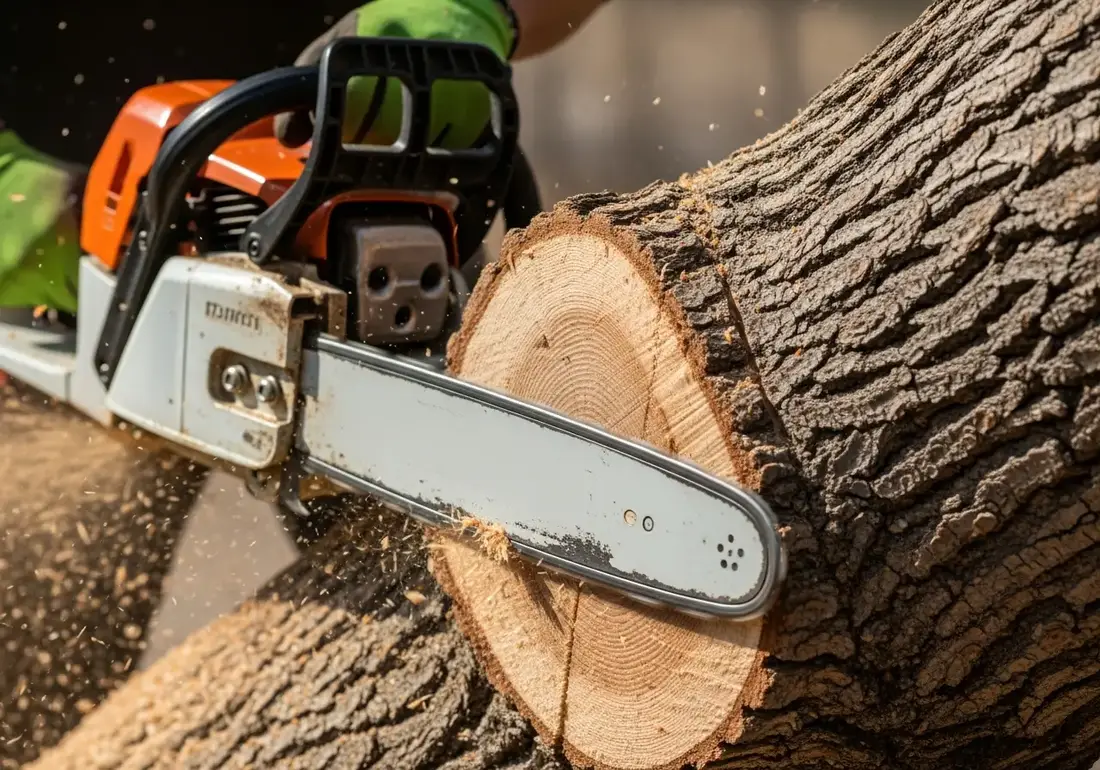
OSHA applies fall protection, line-clearance, and equipment rules to tree work. Electrical and fall violations are cited seriously.
Falls, chainsaw injuries, struck-by limbs, and electrical contact are frequently fatal or permanently disabling.
A fatality can end a small tree-service company through penalties, litigation, and lost work and insurance.
Utilities and municipalities award line-clearance and contract work to crews with proven qualifications and safety records.
A climber ties into a limb that looks sound but is internally decayed. The limb breaks under load and the climber falls before the backup system engages.
A worker cutting overhead in an awkward position experiences saw kickback. The moving chain contacts his leg, causing a severe laceration while he is suspended in the tree.
A non-qualified crew trims a tree touching an overhead line. A cut limb bridges the conductor and the worker, electrocuting him through the tree.
A top is cut without a clear, controlled drop zone. It falls unpredictably and strikes a ground worker who was not kept clear.
A ground worker feeds brush into a chipper and is caught by material or clothing, pulling him toward the infeed.
The federal regulations that govern tree service work.
Requires qualified line-clearance arborists and minimum approach distances for tree work near energized power lines.
Requires fall protection for elevated tree work, including climbing and aerial-lift operations.
Provides requirements applicable to chainsaw use, felling, and related tree-work practices and PPE.
The industry consensus standard for safe tree-care operations, widely referenced alongside OSHA requirements.
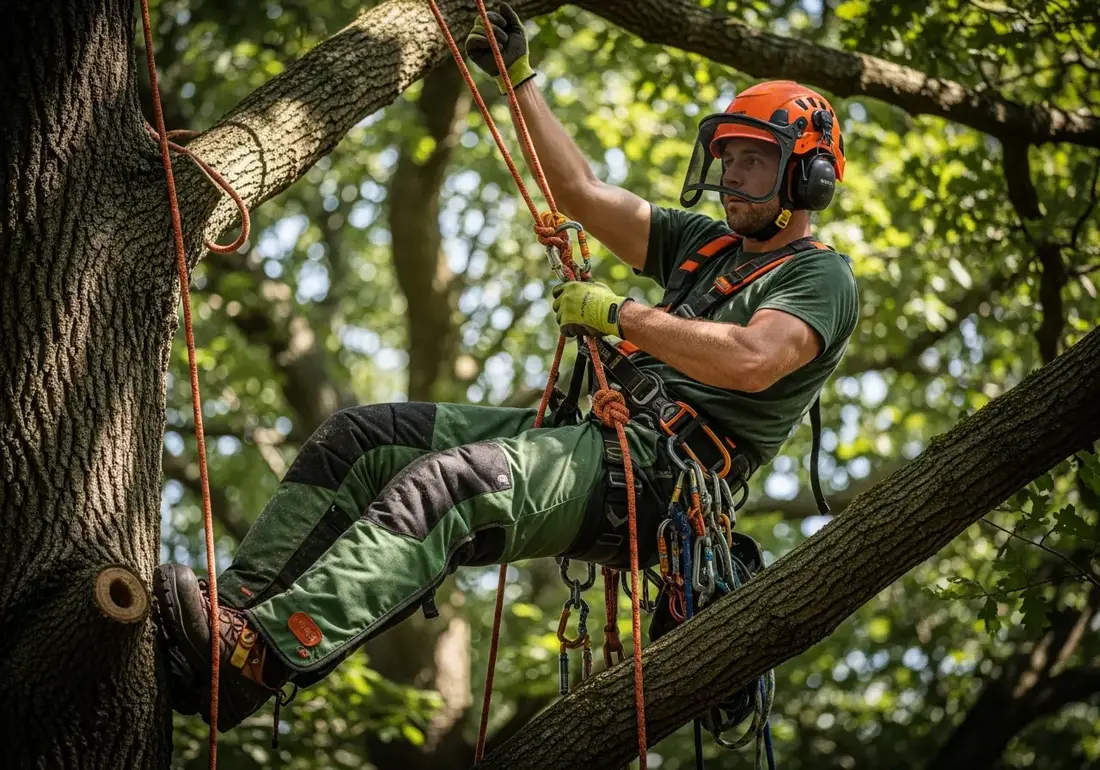
Work top-down through the hierarchy of controls — eliminate the hazard first, then fall back to procedures and PPE.
Keep workers off unsafe anchors and away from live lines.
Qualify workers and plan the job before cutting.
Protect against cuts, falls, and impact.
Trained, qualified arborists are the backbone of preventing tree-work fatalities, because judging tree condition, running a saw aloft, and staying clear of energized lines all demand competency that cannot be improvised on the job.
OSHA Scan analyzes tree-work photos to flag climbers without visible fall protection or backup systems, crews working within power-line clearance distances, ground workers standing in uncontrolled drop zones, and missing chainsaw PPE. Each finding cites the relevant OSHA or ANSI Z133 standard and generates a corrective-action checklist covering fall protection, line clearance, and drop zones — so a supervisor can catch a fatal setup from a photo before the saw runs.
Only qualified line-clearance arborists trained under OSHA 1910.269 may work within the minimum approach distance of energized power lines. Untrained crews must keep well clear — generally at least ten feet for typical distribution voltages — and contact the utility to de-energize or cover lines when work must be done closer.
Climbing arborists use a work-positioning climbing system plus a separate backup fall-arrest system so that a single point of failure does not result in a fall to the ground. Anchors must be evaluated for strength, since limbs can be internally decayed, and all components are inspected before each climb.
Use a saw with a functioning chain brake and low-kickback chain, keep the chain sharp and properly tensioned, cut with the correct part of the bar, maintain a firm two-handed grip and stable footing, and never cut above shoulder height when avoidable. Chainsaw-protective chaps or pants provide critical last-line protection.
Cut limbs and tops can swing, barber-chair, or fall unpredictably, and a heavy limb from height carries enormous energy. Establishing a controlled drop zone, keeping ground workers clear, using proper rigging to lower heavy pieces, and maintaining communication between the climber and ground crew prevent most struck-by injuries.
Feed material from the side, never reach into the infeed, use a push stick or the feed table for short pieces, keep loose clothing and drawstrings away, and know the location of the emergency shutoff bar. Never work at the chipper alone in a way that leaves no one able to stop the machine if you are caught.
For non-qualified workers, keep everything — the worker, tools, and cut limbs — at least ten feet from lines up to 50kV, with greater distances for higher voltages. Qualified line-clearance arborists follow the specific minimum approach distances in OSHA 1910.269 for the system voltage. Assume every line is energized unless the utility confirms otherwise.
Tree care sits among the most heavily cited high-hazard industries, and OSHA applies fall protection, electrical, logging, and general-duty requirements to it. Serious violations run several thousand dollars each, while willful or repeat violations — such as sending non-qualified crews within power-line clearance distances or letting climbers work without backup fall protection — can reach six figures per violation, with each exposed worker counted separately. A fatality, common in this trade, often draws willful citations and can trigger criminal referral. For a small tree-service company, a single serious incident can mean penalties, litigation, lost contracts, and uninsurable status all at once. Because proper training, line clearance, and fall protection cost far less than one incident, documented compliance is both the safe and the financially sound choice.
Qualified line-clearance arborists must be trained under OSHA 1910.269 and kept current on the minimum approach distances and electrical hazards for the systems they work near. ANSI Z133 competency in climbing, rigging, and cutting should be established initially and refreshed periodically, and many certifications, such as ISA credentials, require continuing education to remain valid. First-aid, CPR, and aerial-rescue training generally need renewal every two years, and aerial-rescue skill in particular should be practiced far more often because a stranded, injured climber may have only minutes. Chainsaw and chipper operators should be re-evaluated for competency regularly. Because crews turn over and skills fade, well-run companies track each worker's training, certification, and rescue-drill dates and refuse to assign anyone with lapsed credentials to line-clearance or climbing work.
Every tree crew needs a rescue plan built around the reality that a climber can be suspended and injured out of reach. Ground workers must be trained and equipped to perform an aerial rescue quickly, because suspension trauma and severe bleeding can become fatal within minutes. The plan should cover electrical contact — never touch a worker who may be energized until the utility confirms the line is dead — chainsaw laceration first aid with tourniquets and trauma dressings on site, and clear directions for emergency responders to a location that may be off a main road. A means to summon help must always be available, and no climber should work where no one on the ground could initiate a rescue. Crews should rehearse aerial rescue regularly rather than assume they can improvise it under stress.
Life-safety gear demands frequent, documented inspection. Climbing lines, harnesses, lanyards, carabiners, and rigging must be inspected by the user before every climb and pulled from service at the first sign of cuts, fraying, or shock loading, since these components are all that hold a climber aloft. Chainsaws need a pre-use check of the chain brake, throttle interlock, and chain tension each day. Aerial lifts require the manufacturer's daily and periodic inspections plus annual certification, and chippers need daily checks of feed controls and the emergency shutoff bar. On a longer cycle, harnesses and ropes should get a formal, recorded inspection by a competent person. Logging each inspection creates the record OSHA expects and, more importantly, catches a failing rope or brake before it causes a fall or laceration.
Run through this before, during, and after every job.
14 more checklist points are waiting. Register with your email to reveal every item and download the complete OSHA compliance checklist as a printable PDF. Free, and it only takes a few seconds.
Already have an account? Sign in
A general tree-service crew, not trained in line clearance, took a job trimming a large tree whose branches had grown into an overhead power line. Under pressure to finish, they proceeded without contacting the utility to de-energize or cover the line.
A worker cut a limb that fell across the energized conductor and back against the tree he was in. The limb bridged the line and the tree, and the current passed through him, causing a severe electrical injury that a ten-foot clearance would have prevented.
The company adopted a firm policy that only qualified line-clearance arborists work near energized lines and that the utility is contacted to de-energize or cover lines otherwise. It reinforced fall protection, drop-zone control, and chainsaw PPE, and used OSHA Scan to photo-verify line clearance and fall protection before work began.
The company recorded no further electrical-contact incidents and passed subsequent safety reviews, and its qualified-crew credentials helped it win recurring utility vegetation-management contracts it could not bid on before.
Snap a photo of the job site, and the AI categorizes findings against OSHA standards in seconds.
Each finding includes consistent corrective actions and structured JHA outputs. Check items off as your crew resolves them.
Build a searchable chemical library from label photos. Review manufacturer SDS matches when available and follow the status of missing documents.
Missing-document requests enter a review queue; they do not automatically contact suppliers.
Invite admins, managers, and supervisors with role-based access that keeps the right people in control.
A qualified person must review AI-flagged items before making safety decisions. Do not replace required comprehensive safety walkthroughs with AI reports. Features, limits, and downloads depend on your account’s plan and permissions.
OSHA Scan reads a single photo. That makes it fast and easy for anyone on site — but it also means it has real limits. Here's an honest look at both.
Reviewed by OSHA Scan Editorial
This content is produced by the OSHA Scan Editorial team and reviewed with AI assistance. It is general safety information, not legal or compliance advice. OSHA Scan is an independent tool and is not affiliated with, endorsed by, or certified by OSHA or the U.S. Department of Labor.
Upload a photo of your tree service job site and get an instant, OSHA-cited hazard report.
Start your free trial