
1
Set the scene
Start with context
Fill the frame
2–3 ft for close-ups; keep ladders, cords and workers fully in view.
Struck-by, rollover, blind spots, and load drops
Forklifts, excavators, and cranes move enough mass to kill instantly, and the operator often can't see the worker in the way. OSHA Scan analyzes job-site photos to catch missing spotters, unsecured loads, and workers in equipment blind spots before a struck-by or rollover happens.
Free · No account needed to scan · Results in seconds
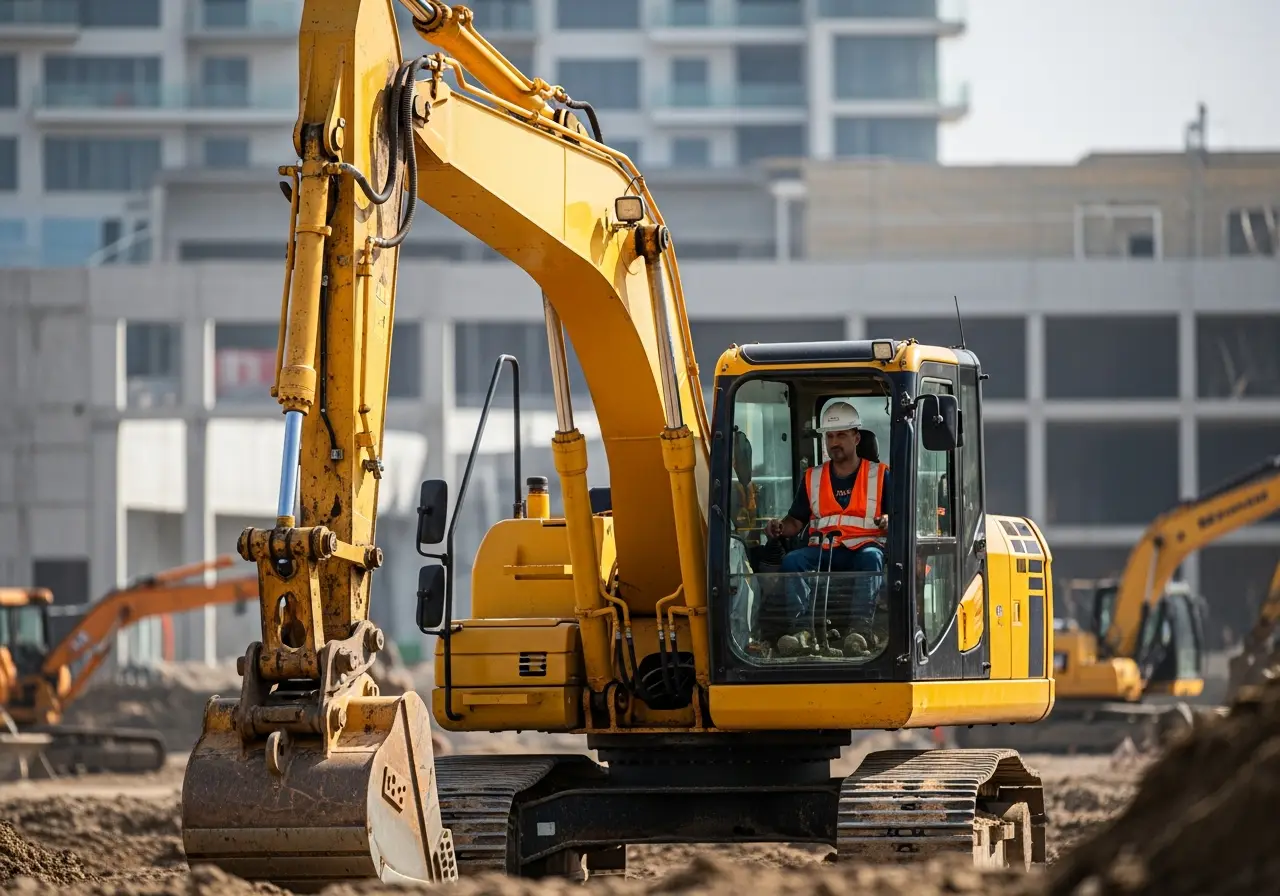
forklift-related deaths in the U.S. each year
serious forklift injuries annually
of equipment deaths are rollovers
typical weight of a loaded excavator
Upload a real job-site photo and OSHA Scan detects visible heavy equipment hazards in seconds — no account needed to run your first scan.
Use the real site or facility name. If you save the scan after signup, it becomes the report name.
Three angles, one deeper scan
Only the wide shot is required — every extra angle gives the AI more places to look.
Required: Set the scene — one wide shot lets the AI sweep the whole area at once
Stand at the entry point and capture corner to corner: floors, ladders, scaffolds, and everyone at work
Drop a job-site photo or walkthrough video
Click to upload, drag & drop, or snap a photo on site. Photos scan free in about 15 seconds — no signup, no card. Video walkthroughs (up to 3 min) run on a free account.
Small habits, sharper scans
Set the scene
Start with context
Fill the frame
2–3 ft for close-ups; keep ladders, cords and workers fully in view.
Capture clearly
Make the frame usable
Light it right
Keep the sun or lights behind you — glare and shadows hide hazards.
Tap to focus
Tap the hazard on screen and hold still one second — blur can't be flagged.
Choose the useful view
Give the AI room to understand
Go landscape
Turn your phone sideways — a wider frame catches more of the scene.
Only upload photos you have permission to use, and avoid images showing personal, customer, or confidential information. Demo photos and results are held privately for up to 48 hours so you can save them to a free account; unclaimed photos are deleted automatically. Results are an AI-assisted preliminary review, not an official OSHA determination.
Here is what an OSHA Scan report looks like for heavy equipment hazards. It is an illustrative example built from this trade's hazards — clearly marked, not live scan data.
Compliance score
64
Lower means more potential hazards found
3 potential hazards found
Forklift blind-spot struck-by
Possibly related to Powered industrial trucks (29 CFR 1910.178)
Observed condition: A forklift operator backs up with a raised load blocking forward view and cannot see a worker crossing behind.
Corrective action: Physically separate pedestrian routes from equipment paths
High confidence
Excavator rollover on a slope
Possibly related to Cranes and derricks in construction (29 CFR 1926.1400–1442)
Observed condition: An operator works an excavator across a soft embankment.
Corrective action: Equip machines with backup alarms, cameras, and proximity sensors
Medium confidenceNot fully clear from the photo — verify on site.
Crane load drop
Possibly related to Motor vehicles and material handling equipment (29 CFR 1926.601–602)
Observed condition: A load is rigged with a damaged sling that exceeds its rated capacity.
Corrective action: Maintain ROPS and require seat-belt use
High confidence
Illustrative AI-assisted workflows. Review the findings; they are not a compliance certification.
Heavy equipment hazards center on the enormous mass and force these machines put in motion. Struck-by incidents — a forklift, loader, or truck hitting a worker on foot — are the most common cause of equipment fatalities, often because the operator simply could not see the person in a blind spot behind or beside the machine.
Primary OSHA standard: 29 CFR 1910.178
Heavy equipment hazards center on the enormous mass and force these machines put in motion. Struck-by incidents — a forklift, loader, or truck hitting a worker on foot — are the most common cause of equipment fatalities, often because the operator simply could not see the person in a blind spot behind or beside the machine.
Rollovers are the second major killer. Excavators, loaders, and forklifts tip when operated on slopes, soft ground, or with unbalanced loads, and an operator who is not belted in is frequently crushed by the machine or thrown from the cab. Load drops from cranes, forklifts, and loaders strike workers below when loads are improperly rigged or exceed capacity.
Additional hazards include electrocution when booms or masts contact overhead power lines, caught-between injuries around swinging counterweights and pinch points, and operator fatigue that slows reaction time. Because these machines dominate active work zones, protecting ground workers and controlling traffic is central to equipment safety.
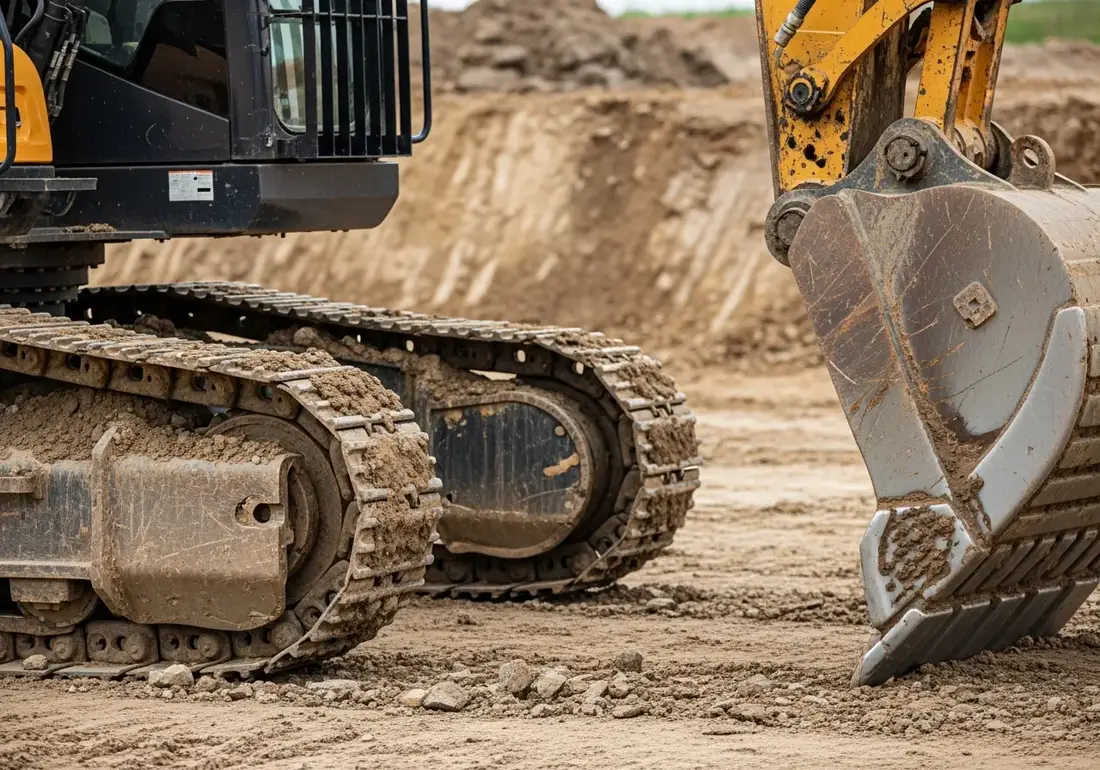
OSHA requires certified operators, daily inspections, and traffic controls. Struck-by and forklift violations are among the most frequently cited.
Equipment incidents cause crushing, amputation, and fatal injuries with little chance of recovery when they occur.
Equipment fatalities halt projects, spike insurance costs, and expose companies to significant liability.
Clients and general contractors favor firms with certified operators and documented equipment safety programs.
A forklift operator backs up with a raised load blocking forward view and cannot see a worker crossing behind. The worker is struck and pinned before the operator reacts.
An operator works an excavator across a soft embankment. The ground gives way, the machine tips, and the unbelted operator is injured as the cab rolls.
A load is rigged with a damaged sling that exceeds its rated capacity. The sling fails and the load falls onto workers positioned beneath the lift.
A crane operator swings the boom near an overhead line without a spotter or clearance check. The boom contacts the line and energizes the machine and rigging.
A worker walks through the swing radius of an excavator. As the machine rotates, the counterweight pins the worker against a nearby structure.
The federal regulations that govern heavy equipment work.
Requires operator training and certification, daily inspections, and safe operating practices for forklifts and similar equipment.
Governs crane operation, rigging, power-line clearance, and operator qualification on construction sites.
Requires backup alarms, seat belts, and safe operation of trucks and earthmoving equipment.
Requires ROPS and seat belts on earthmoving equipment to protect operators in a rollover.
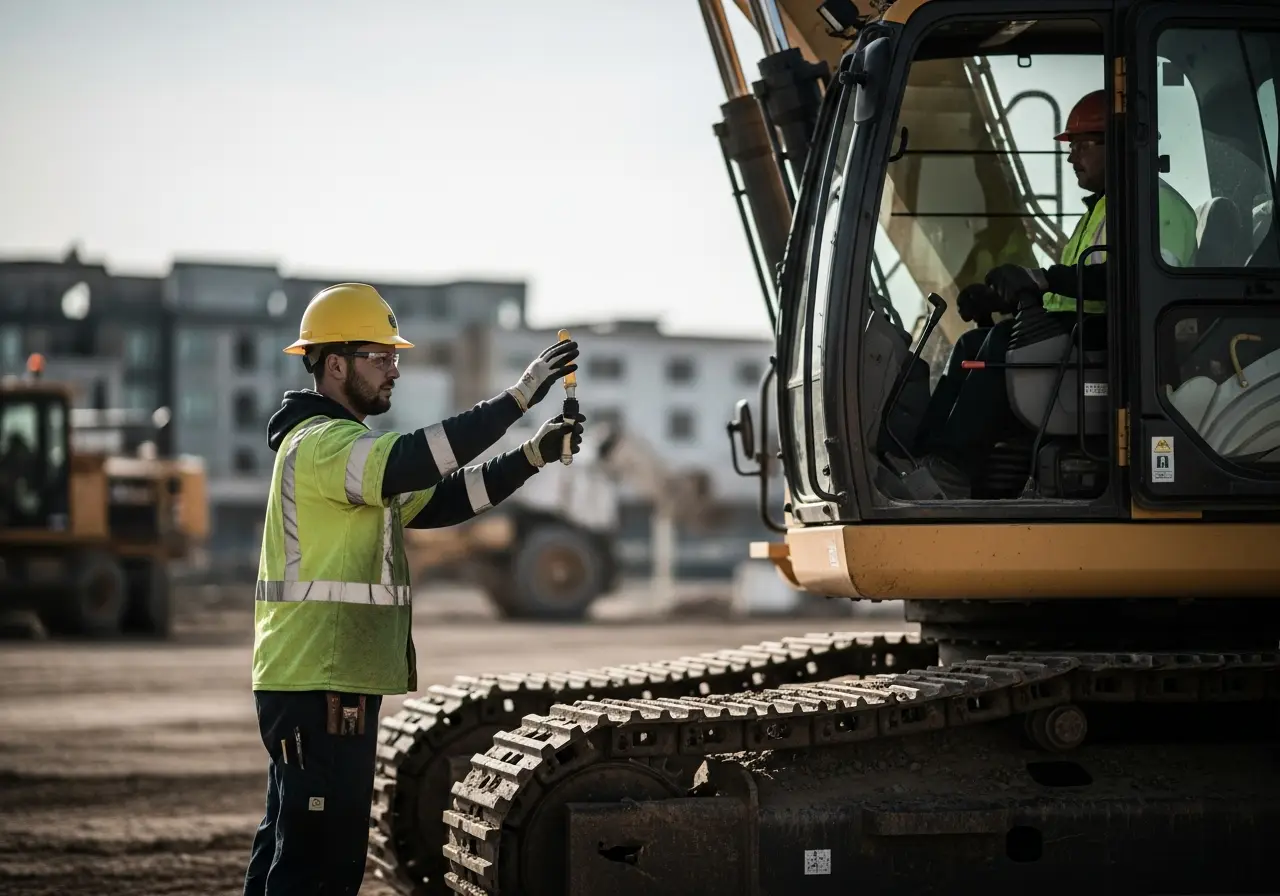
Work top-down through the hierarchy of controls — eliminate the hazard first, then fall back to procedures and PPE.
Separate people from machines and protect the operator.
Certify operators and control the work zone.
Make ground workers visible and protected.
Certified, evaluated operators and trained spotters are the backbone of preventing struck-by, rollover, and load-drop incidents.
OSHA Scan reviews photos of active equipment zones to flag workers on foot inside blind spots and swing radii, missing spotters during lifts, loads rigged near or over capacity, and equipment operating close to overhead power lines. Each finding is tied to the applicable OSHA standard and turned into a corrective-action checklist covering pedestrian separation, spotters, and rigging — so a supervisor can spot a struck-by setup from a single photo before the machine moves.
Yes. OSHA requires powered-industrial-truck operators to be trained, evaluated, and certified for the specific type of truck and workplace conditions. Certification must be refreshed at least every three years and after any incident, near-miss, or change in equipment or conditions.
Blind spots are managed by keeping pedestrians out of equipment areas, using spotters for reversing and lifts, and fitting cameras, mirrors, and proximity alarms. Operators should travel with loads positioned to preserve visibility and back up only when the path is confirmed clear.
Operate on stable, graded ground, avoid steep slopes and soft edges, keep loads within capacity and low to the ground, and never exceed the machine's rated limits. Rollover protective structures and worn seat belts are the last line of defense, dramatically improving survival if a tip occurs.
OSHA sets minimum clearance distances based on line voltage — commonly at least 10 feet for lines up to 50kV, and more for higher voltages. A dedicated spotter, clearance planning, and de-energizing or insulating lines when possible prevent boom and mast contact.
The operator often cannot see the load's landing zone or workers nearby. A trained spotter using standard signals keeps people clear, guides the load, and can stop the operation instantly if someone enters the danger zone, preventing struck-by and load-drop injuries.
Check tires or tracks, hydraulics and fluid levels, brakes, steering, backup alarms, lights, seat belts, and any safety devices, plus rigging and slings for lift equipment. Defects must be documented and the machine tagged out of service until repaired.
Powered-industrial-truck and crane violations are among OSHA's most frequently cited and can be expensive. Serious violations run into the thousands of dollars per instance, and willful or repeat violations can reach the statutory maximum of well over $160,000 each, with amounts adjusted for inflation annually. OSHA commonly cites employers for uncertified forklift operators under 1910.178, missing rollover protection or seat-belt use under 1926.602, inadequate crane operator qualification under 1926.1400 series, and failure to keep workers clear of power lines. A struck-by or rollover fatality typically triggers a comprehensive inspection that uncovers additional citations, and willful violations connected to a death can lead to criminal referral. Because equipment incidents also spike workers' compensation and liability costs, the total financial impact of a violation usually dwarfs the OSHA penalty itself.
Forklift and powered-industrial-truck operators must be evaluated at least every three years, and OSHA requires additional retraining whenever an operator is involved in an accident or near-miss, is observed operating unsafely, is assigned a different type of truck, or when workplace conditions change. Crane operators must hold current certification from an accredited program and meet employer evaluation requirements before operating. Riggers and signal persons must be qualified for the tasks they perform. Beyond formal certification cycles, many employers conduct annual refresher training and documented competency checks. Keeping signed training, evaluation, and certification records is essential because OSHA inspectors and general contractors routinely verify that every operator on site is current for the specific equipment they run, and an expired or missing certification is a citable violation on its own.
A site emergency plan for heavy-equipment incidents should address struck-by, rollover, crushing, and power-line contact scenarios. Workers must know how to shut down and isolate equipment, summon emergency medical services, and give responders the exact site location. For a rollover, no one should approach until the machine is stable. For power-line contact, the operator should stay in the cab if possible until the line is confirmed de-energized, and bystanders must keep well clear to avoid step-potential shock. Trained first-aid and CPR personnel should be available on site, and a plan for extricating a pinned or crushed worker must not put rescuers in the same danger zone. The plan should list emergency contacts, equipment shutoff procedures, and staging areas, and it should be reviewed in toolbox talks so every crew member knows their role before an incident occurs.
Employers should maintain operator training and evaluation records showing the date, the person trained, the evaluator, and the equipment type, and keep them current for the life of each operator's assignment. Daily pre-operation inspection logs, defect reports, and maintenance records must be retained to prove machines were verified safe and that defects were corrected before continued use. Crane operations require documented annual and periodic inspections, load tests where applicable, and rigging inspection records. Any injury involving equipment must be entered on the OSHA 300 log, which is kept for five years, with serious incidents reported to OSHA within the required timeframes. Keeping these records organized is critical because inspectors and general contractors routinely request proof of current operator certification, daily inspections, and maintenance history, and missing documentation can itself be cited even when the equipment was actually safe.
Run through this before, during, and after every job.
14 more checklist points are waiting. Register with your email to reveal every item and download the complete OSHA compliance checklist as a printable PDF. Free, and it only takes a few seconds.
Already have an account? Sign in
In a busy distribution yard, forklifts and pedestrians shared the same lanes with no physical separation. Operators frequently traveled with raised loads that blocked their forward view.
An operator reversing to reposition could not see a worker crossing behind the forklift. The worker was struck and seriously injured before the operator heard the shouts of coworkers. An investigation found no spotter, no pedestrian lanes, and an inoperative backup alarm.
The facility separated pedestrian and equipment routes with barriers, required functioning backup alarms and spotters for blind maneuvers, and reinforced operator certification. It adopted OSHA Scan to photo-audit the yard for workers in equipment paths and blind spots.
Struck-by near-misses dropped sharply after pedestrian lanes were installed, and the yard went a full year without a forklift injury. The photo audits repeatedly flagged workers drifting into equipment lanes, letting supervisors correct the behavior before an incident.
Snap a photo of the job site, and the AI categorizes findings against OSHA standards in seconds.
Each finding includes consistent corrective actions and structured JHA outputs. Check items off as your crew resolves them.
Build a searchable chemical library from label photos. Review manufacturer SDS matches when available and follow the status of missing documents.
Missing-document requests enter a review queue; they do not automatically contact suppliers.
Invite admins, managers, and supervisors with role-based access that keeps the right people in control.
A qualified person must review AI-flagged items before making safety decisions. Do not replace required comprehensive safety walkthroughs with AI reports. Features, limits, and downloads depend on your account’s plan and permissions.
OSHA Scan reads a single photo. That makes it fast and easy for anyone on site — but it also means it has real limits. Here's an honest look at both.
Reviewed by OSHA Scan Editorial
This content is produced by the OSHA Scan Editorial team and reviewed with AI assistance. It is general safety information, not legal or compliance advice. OSHA Scan is an independent tool and is not affiliated with, endorsed by, or certified by OSHA or the U.S. Department of Labor.
Upload a photo of your heavy equipment job site and get an instant, OSHA-cited hazard report.
Start your free trial