
Toxic Gas Can Drop a Worker Before They Smell It
Catch invisible gas hazards before they overcome your crew
Carbon monoxide from fuel-powered equipment, hydrogen sulfide in sewers and tanks, and other toxic gases can incapacitate or kill in minutes — often with no warning smell. Workers collapse, would-be rescuers rush in, and a single incident becomes multiple casualties. OSHA Scan analyzes job-site photos to flag gas-powered engines indoors, missing gas monitors, and inadequate ventilation before an invisible hazard becomes a fatality.
Free · No account needed to scan · Results in seconds
May relate to 29 CFR 1926.55
Cause of toxic-inhalation deaths at work
Per serious OSHA air-contaminant violation
OSHA 8-hr limit for carbon monoxide
Of gas deaths are would-be rescuers
What this scenario looks like
A toxic gas hazard exists wherever harmful gases can accumulate faster than they disperse — carbon monoxide from gas or diesel engines, hydrogen sulfide from decomposing organic matter in sewers and tanks, methane in trenches, and process gases in industrial settings. Many are colorless, and some, like carbon monoxide, are completely odorless.
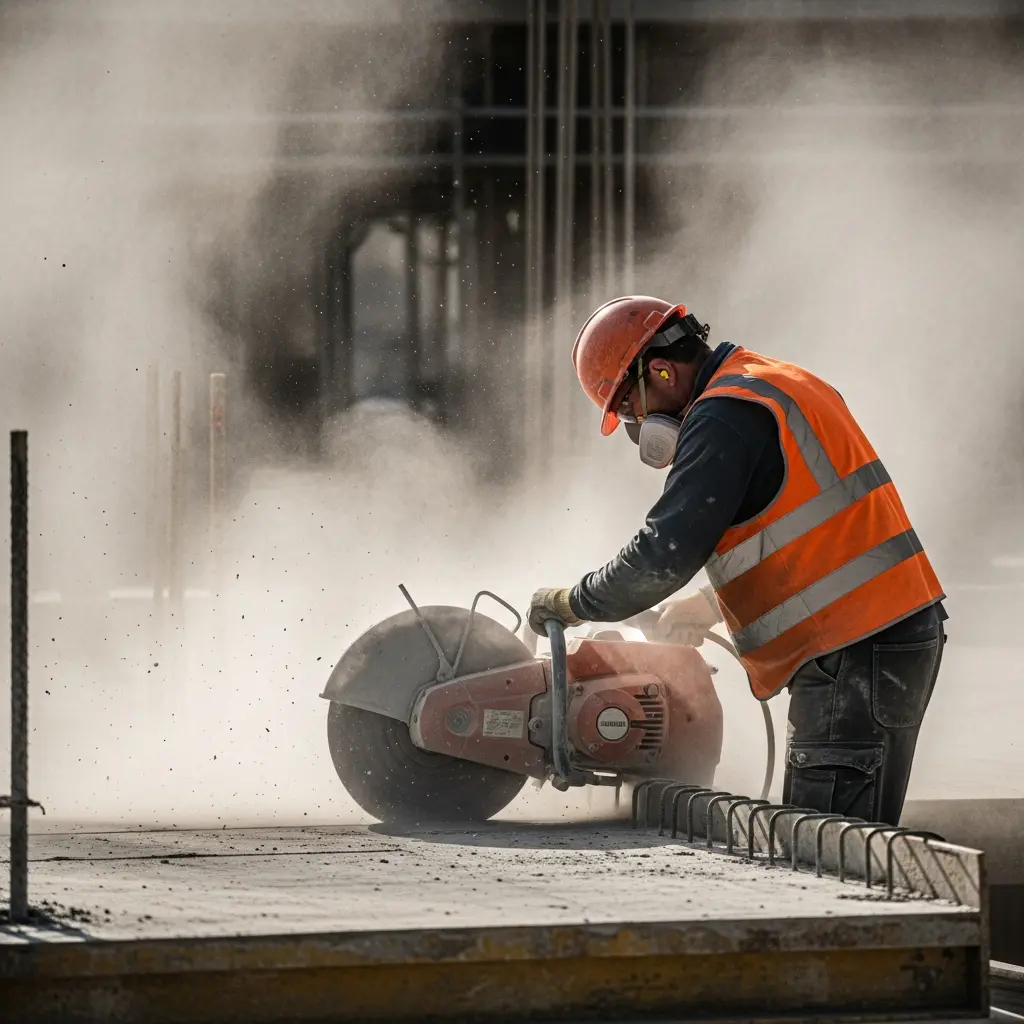
On job sites it shows up as a gas-powered generator, pressure washer, or concrete saw running inside a building or partial enclosure; sewer and manhole work with no atmospheric testing; fuel-fired heaters warming an enclosed space; or welding and cutting in a poorly ventilated area. Hydrogen sulfide is especially deceptive — it smells like rotten eggs at low levels but deadens the sense of smell at high concentrations.
The danger is that many toxic gases give no reliable warning. A worker may feel a headache or dizziness, or nothing at all, before losing consciousness. Coworkers who see someone down often rush in to help and are overcome themselves. That silent, multi-victim potential is exactly why continuous monitoring and photo-based detection matter.
A labelled example scan for this scenario
Here is what an OSHA Scan report looks like for toxic gas exposure. It is an illustrative example built from this scenario's hazards — clearly marked, not live scan data.
Compliance score
64
Lower means more potential hazards found
3 potential hazards found
Toxic Gas Exposure
Confirmed violationCriticalPossibly related to Gases, vapors, fumes, dusts, and mists (29 CFR 1926.55)
Observed condition: A toxic gas hazard exists wherever harmful gases can accumulate faster than they disperse — carbon monoxide from gas or diesel engines, hydrogen sulfide from decomposing organic m…
Corrective action: Use electric or battery-powered equipment instead of fuel engines indoors
High confidence
Toxic Gas Exposure: Confined spaces — permit-required program
Needs reviewHighPossibly related to Confined spaces — permit-required program (29 CFR 1926.1204)
Observed condition: Requires atmospheric testing, ventilation, attendants, and rescue procedures for permit-required confined spaces where toxic or oxygen-deficient atmospheres can develop.
Corrective action: Vent engine exhaust directly outside with dedicated ducting
Medium confidenceNot fully clear from the photo — verify on site.
Toxic Gas Exposure: Respiratory protection
Confirmed violationMediumPossibly related to Respiratory protection (29 CFR 1910.134)
Observed condition: Requires a respiratory protection program with proper respirator selection, medical evaluation, and fit testing whenever respirators are used against toxic atmospheres.
Corrective action: Provide mechanical ventilation to dilute and remove gases in enclosed work
High confidence
See the workflow click into place
Illustrative AI-assisted workflows. Review the findings; they are not a compliance certification.
Why this scenario matters
Immediate consequences
Toxic gases can cause loss of consciousness, respiratory arrest, and death within minutes. Survivors of carbon monoxide poisoning may suffer permanent neurological damage.
Legal & financial impact
OSHA cites air-contaminant and ventilation violations aggressively. A serious violation exceeds $16,000, willful or repeat violations top $165,000, and a gas fatality routinely triggers criminal referral and litigation.
Operational impact
A gas incident shuts down the site, launches an OSHA investigation, and forces a review of every fuel-powered tool and ventilation practice — halting work far longer than the exposure itself.
Industry-specific concerns
Utility, sewer, tank, tunneling, and enclosed-construction crews face the highest toxic-gas risk, often relying on gas engines and entering spaces where hydrogen sulfide and carbon monoxide accumulate.
How OSHA Scan detects this hazard
OSHA Scan uses an AI vision model to spot the conditions that lead to toxic gas exposure. Upload a photo of your work area and it identifies fuel-powered engines operating in enclosed or partially enclosed spaces, checks for gas monitors and ventilation equipment, flags confined and below-grade work lacking atmospheric testing, rates the severity, and cites the relevant OSHA air-contaminant standard — in seconds, before the gas builds up.
Analyze your first photo freeScan a photo for toxic gas exposure now
Upload a real job-site photo and OSHA Scan detects visible hazards in seconds — no account needed to run your first scan.
- Visible gas-buildup conditions flagged, from fuel engines indoors to missing ventilation
- The air-contaminant standard 1926.55 an unvented engine may relate to, cited per finding
- A reminder that gas concentrations still need a calibrated monitor to confirm
Use the real site or facility name. If you save the scan after signup, it becomes the report name.
Three angles, one deeper scan
Only the wide shot is required — every extra angle gives the AI more places to look.
Required: Set the scene — one wide shot lets the AI sweep the whole area at once
Stand at the entry point and capture corner to corner: floors, ladders, scaffolds, and everyone at work
Drop a job-site photo or walkthrough video
Click to upload, drag & drop, or snap a photo on site. Photos scan free in about 15 seconds — no signup, no card. Video walkthroughs (up to 3 min) run on a free account.
Accuracy boosters
Small habits, sharper scans
Set the scene
Start with context
Fill the frame
2–3 ft for close-ups; keep ladders, cords and workers fully in view.
Capture clearly
Make the frame usable
Light it right
Keep the sun or lights behind you — glare and shadows hide hazards.
Tap to focus
Tap the hazard on screen and hold still one second — blur can't be flagged.
Choose the useful view
Give the AI room to understand
Go landscape
Turn your phone sideways — a wider frame catches more of the scene.
Only upload photos you have permission to use, and avoid images showing personal, customer, or confidential information. Demo photos and results are held privately for up to 48 hours so you can save them to a free account; unclaimed photos are deleted automatically. Results are an AI-assisted preliminary review, not an official OSHA determination.
New: Video walkthrough scans
Record up to 3 minutes of your site — the AI extracts frames and categorizes findings with exact timestamps. Free account required.
Get the best results
Wide shot first
Stand at the entrance and photograph the entire work area so AI sees the full context
Hazard areas
Photograph elevated surfaces, equipment, electrical panels, and anywhere workers are active
Close-ups last
Move in close on anything damaged, missing, or that looks risky — the AI catches more detail
A gas-powered pressure washer inside a warehouse
The situation
A cleaning crew ran a gasoline-powered pressure washer inside a large but closed warehouse to strip a concrete floor. The roll-up doors were shut to keep water spray contained, and the engine ran continuously for over an hour.
What went wrong
Carbon monoxide accumulated with no ventilation and no gas monitor to sound an alarm. One worker became dizzy and nauseated, then collapsed. A coworker who came to help also began feeling faint before dragging the victim outside. Both required hospitalization for carbon monoxide poisoning.
How OSHA Scan would have prevented it
A single photo of the setup run through OSHA Scan before work began would have flagged a gasoline engine operating in an enclosed space with no ventilation or gas monitor as a critical toxic-gas hazard, cited the air-contaminant standard, and prompted the crew to switch to electric equipment or open the doors and run mechanical ventilation with a CO monitor.
Lessons learned
Fuel-powered engines belong outdoors or require dedicated exhaust ventilation and continuous gas monitoring. When a worker goes down from gas, the instinct to rush in unprotected turns one casualty into two.
Prevention best practices
Layered controls, from most to least effective.
Engineering controls
Keep toxic gas out of the breathing zone at the source.
- Use electric or battery-powered equipment instead of fuel engines indoors
- Vent engine exhaust directly outside with dedicated ducting
- Provide mechanical ventilation to dilute and remove gases in enclosed work
- Install continuous gas monitors with audible alarms for CO, H2S, and O2
- Isolate gas-generating processes from occupied work areas
Administrative controls
Test, plan, and control entry to keep gases from surprising the crew.
- Test the atmosphere before and during work in sewers, tanks, and trenches
- Follow confined-space entry procedures where toxic gas can accumulate
- Post a trained attendant and a rescue plan — never enter to rescue unprotected
- Establish and enforce a no-idling policy for engines in or near enclosures
- Train workers to recognize early symptoms and evacuate immediately
- Calibrate and bump-test gas monitors on schedule
Personal protective equipment
Protect the airway when gases cannot be fully eliminated.
- Supplied-air respirators or SCBA for oxygen-deficient or high-toxicity atmospheres
- Personal multi-gas monitors worn in the breathing zone
- Air-purifying respirators only where the gas and level are known to be within limits
- Fit-test and medically clear all respirator users
- Inspect respirators, air supplies, and monitors before each use
OSHA compliance & citations
The federal standards this hazard may relate to.
Gases, vapors, fumes, dusts, and mists
Requires employers to keep worker exposure to airborne contaminants below the limits in the standard, using administrative or engineering controls and, where needed, respiratory protection.
Up to $16,550 per serious violation; $165,514 for willful or repeat
Confined spaces — permit-required program
Requires atmospheric testing, ventilation, attendants, and rescue procedures for permit-required confined spaces where toxic or oxygen-deficient atmospheres can develop.
Up to $16,550 per serious violation
Respiratory protection
Requires a respiratory protection program with proper respirator selection, medical evaluation, and fit testing whenever respirators are used against toxic atmospheres.
Up to $16,550 per serious violation
Incident response protocol
If an incident occurs, act fast and in order.
Immediate actions (first 5 minutes)
- 1Do NOT rush into the atmosphere to rescue — call 911 first
- 2If safe, ventilate and shut off the gas source from outside
- 3Move victims to fresh air only with proper respiratory protection
- 4Begin CPR and oxygen for anyone not breathing, once in clean air
- 5Account for all workers and keep others out of the area
Emergency response (5-30 minutes)
- 1Let trained, air-supplied rescuers make any entry
- 2Provide responders the gas type, source, and monitor readings
- 3Continue ventilation until the atmosphere tests safe
- 4Prevent re-entry until monitors confirm the area is clear
- 5Document conditions and readings once it is safe
Post-incident
- 1Notify OSHA within 8 hours for a fatality, or 24 hours for a hospitalization
- 2Launch an investigation into the gas source and control failure
- 3Preserve equipment, monitors, and calibration records
- 4Interview witnesses and reconstruct the atmosphere timeline
- 5Update ventilation, monitoring, and entry procedures and retrain the crew
Team training module
Workers will understand how toxic gases accumulate and harm the body, recognize high-risk conditions, and correctly use monitoring, ventilation, and respiratory protection — and never attempt an unprotected rescue.
Train before any work involving fuel engines or gas-prone spaces, refresh annually, and reinforce with a toolbox talk before each entry using real photos of safe and unsafe setups.
Training topics
- Common toxic gases and their sources on site
- How carbon monoxide and hydrogen sulfide affect the body
- Recognizing enclosed and below-grade gas risks
- Atmospheric testing before and during work
- Using and calibrating personal and area gas monitors
- Ventilation methods to dilute and remove gases
- Respirator selection for toxic atmospheres
- Confined-space entry and non-entry rescue
- Early symptoms and immediate evacuation
- OSHA requirements and penalties
Compliance checklist
Run these checks to stay ahead of citations.
Daily pre-work inspection
- All potential gas sources and enclosed spaces identified
- Fuel engines kept outdoors or vented with dedicated exhaust
- Mechanical ventilation set up for enclosed work
- Gas monitors calibrated, bump-tested, and worn in the breathing zone
- Atmosphere tested before entry to confined or below-grade spaces
- Attendant assigned and non-entry rescue plan in place
- Respiratory protection available and matched to the hazard
- Workers briefed on gas hazards and evacuation signals
Unlock the full Toxic Gas Exposure checklist
10 more checklist points are waiting. Register with your email to reveal every item and download the complete OSHA compliance checklist as a printable PDF. Free, and it only takes a few seconds.
Already have an account? Sign in
Frequently asked questions
Which toxic gases are most common on job sites?
Carbon monoxide from fuel-powered engines and heaters, hydrogen sulfide in sewers and tanks, methane in trenches and landfills, nitrogen dioxide from diesel exhaust, and various process gases in industrial work are the most common. Carbon monoxide is odorless, and high hydrogen sulfide levels deaden the sense of smell.
Can I run a generator or pressure washer inside a building?
Not without dedicated exhaust ventilation to the outside and continuous gas monitoring. Fuel-powered engines produce carbon monoxide that accumulates rapidly in enclosed spaces. The safest option is electric or battery-powered equipment, or keeping the engine fully outdoors.
What is the OSHA exposure limit for carbon monoxide?
OSHA's permissible exposure limit for carbon monoxide is 50 parts per million averaged over an 8-hour shift. Levels above roughly 1,200 ppm are immediately dangerous to life or health, and symptoms like headache and dizziness can begin well below that.
Why do so many gas fatalities involve rescuers?
When a worker collapses from gas, coworkers instinctively rush in to help and are overcome by the same atmosphere. A majority of confined-space and toxic-gas deaths are would-be rescuers. Never enter a gas atmosphere to rescue without supplied-air protection and a rescue plan.
Do I need a gas monitor for sewer or tank work?
Yes. Sewers, tanks, and below-grade spaces can accumulate hydrogen sulfide, methane, and carbon monoxide and become oxygen-deficient. Test the atmosphere before entry and monitor continuously during work, and treat these as permit-required confined spaces where applicable.
What respirator protects against toxic gas?
It depends on the gas and concentration. Air-purifying respirators with the correct cartridge work only when the gas and level are known and within limits. Oxygen-deficient or unknown atmospheres, or high concentrations, require supplied-air respirators or SCBA.
What are early symptoms of toxic gas exposure?
Headache, dizziness, nausea, confusion, and shortness of breath are common early signs. Because they resemble ordinary fatigue, workers may ignore them until they lose consciousness. Any of these symptoms in an enclosed or gas-prone area is a signal to evacuate immediately.
How accurate is OSHA Scan at detecting toxic gas hazards?
OSHA Scan detects the visual conditions that lead to toxic gas exposure — fuel engines in enclosed spaces, missing ventilation, and untested confined spaces. It flags the hazard and cites the relevant OSHA standard so you can add monitoring and ventilation.
Protect your crew from invisible gas today
Analyze a photo
Upload a photo of your work area and get instant feedback on gas hazards and ventilation in your exact environment.
Get startedGet the prevention checklist
Put our expert toxic-gas prevention checklist to work on your next job to stay ahead of citations and overcomes.
Get startedTalk to our team
See how OSHA Scan fits your utility, sewer, or enclosed-construction operation and get tailored recommendations.
Get startedJoin safety-first contractors
See how other crews use OSHA Scan to catch gas hazards before anyone is overcome.
Get startedAI photo hazard review
Snap a photo of the job site, and the AI categorizes findings against OSHA standards in seconds.
Consistent corrective actions & JHA
Each finding includes consistent corrective actions and structured JHA outputs. Check items off as your crew resolves them.
Emergency action plans
Access jurisdiction-specific guidelines and emergency action plan templates for your sites.
A qualified person must review AI-flagged items before making safety decisions. Do not replace required comprehensive safety walkthroughs with AI reports. Features, limits, and downloads depend on your account’s plan and permissions.
What the AI can and can't detect
OSHA Scan reads a single photo. That makes it fast and easy for anyone on site — but it also means it has real limits. Here's an honest look at both.
What it can catch from a photo
- Missing or incorrect PPE that is visible in the frame
- Unprotected edges, open holes, and visible fall hazards
- Housekeeping, trip, and blocked walkway or exit hazards
- Visible electrical, struck-by, and equipment-guarding hazards
What a photo can't tell it
- Hazards hidden from view or anything outside the photo
- Exact heights, distances, weights, or measurements
- Training records, procedures, or how equipment is actually used
- Full legal compliance or an official OSHA pass/fail determination
Reviewed by OSHA Scan Editorial
This content is produced by the OSHA Scan Editorial team and reviewed with AI assistance. It is general safety information, not legal or compliance advice. OSHA Scan is an independent tool and is not affiliated with, endorsed by, or certified by OSHA or the U.S. Department of Labor.
Ready to catch hazards before they become incidents?
Start with exactly 5 lifetime AI site scans — no credit card. Build JHA-ready reports and catch changing conditions sooner.
Start your free trial