
No Respirator Where One Is Required Is a Silent Overdose
Catch unprotected workers before contaminated air hits the lungs
When dust, fumes, vapors, or gases exceed safe levels, a respirator is the barrier between a worker and permanent lung damage. Yet respirators go missing, get worn wrong, or are used without fit testing and medical clearance — leaving workers exposed while they think they are protected. OSHA Scan analyzes job-site photos to flag workers in contaminated air without proper respiratory protection before that exposure becomes disease.
Free · No account needed to scan · Results in seconds
May relate to 29 CFR 1910.134
US workers required to wear respirators
Per serious OSHA respiratory violation
Most-cited OSHA standard yearly
Protection from an unfit or missing respirator
What this scenario looks like
A missing-respiratory-protection hazard exists whenever a worker is in an atmosphere that exceeds occupational exposure limits — for dust, fumes, vapors, or gases — without a suitable, properly used respirator. It also exists when a respirator is present but the wrong type, poorly fitted, or worn by someone who has not been medically cleared and fit-tested.
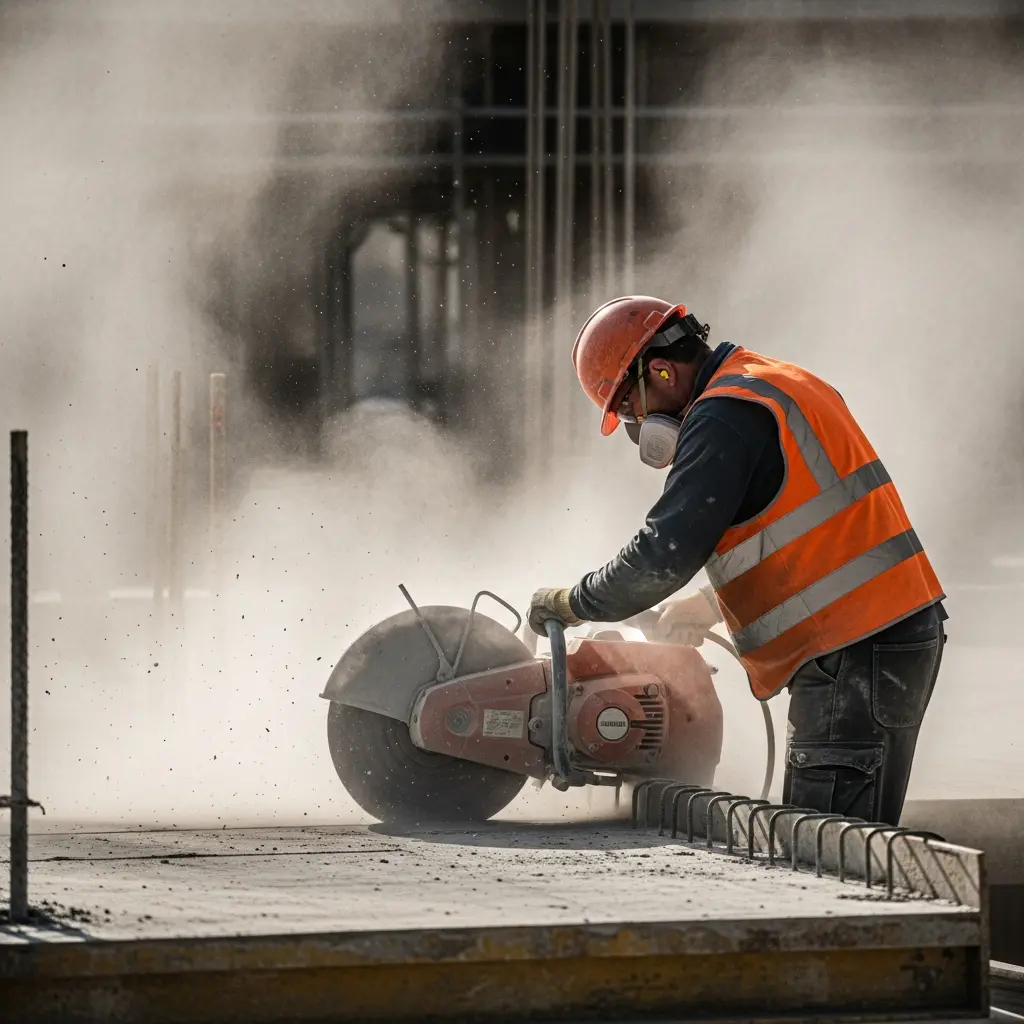
On job sites it shows up as a worker cutting concrete in a dust cloud with a bare face, a painter spraying solvent coatings with no cartridge respirator, a welder in a fume plume without protection, or a crew wearing loose dust masks against vapors those masks cannot filter. Facial hair breaking the seal, dangling straps, and the wrong cartridge for the contaminant are all common failures.
The danger is that unprotected inhalation feels like nothing, and an ill-fitting respirator gives a false sense of safety. A worker may believe a paper mask is protecting them from vapor it does nothing against. That gap between perceived and real protection is exactly why photo-based detection of respirator use matters.
A labelled example scan for this scenario
Here is what an OSHA Scan report looks like for missing respiratory protection. It is an illustrative example built from this scenario's hazards — clearly marked, not live scan data.
Compliance score
64
Lower means more potential hazards found
3 potential hazards found
Missing Respiratory Protection
Confirmed violationCriticalPossibly related to Respiratory protection (29 CFR 1910.134)
Observed condition: A missing-respiratory-protection hazard exists whenever a worker is in an atmosphere that exceeds occupational exposure limits — for dust, fumes, vapors, or gases — without a suit…
Corrective action: Use water suppression, vacuum collection, and local exhaust to lower airborne contaminants
High confidence
Missing Respiratory Protection: Respiratory protection (construction)
Needs reviewHighPossibly related to Respiratory protection (construction) (29 CFR 1926.103)
Observed condition: Applies the respiratory protection requirements of 1910.134 to construction, mandating proper selection, use, and program management for exposed workers.
Corrective action: Substitute lower-hazard materials where feasible
Medium confidenceNot fully clear from the photo — verify on site.
Missing Respiratory Protection: Gases, vapors, fumes, dusts, and mists
Confirmed violationMediumPossibly related to Gases, vapors, fumes, dusts, and mists (29 CFR 1926.55)
Observed condition: Requires keeping airborne contaminant exposure below permissible limits, using respiratory protection where engineering and administrative controls are not sufficient.
Corrective action: Enclose or isolate high-emission processes
High confidence
See the workflow click into place
Illustrative AI-assisted workflows. Review the findings; they are not a compliance certification.
Why this scenario matters
Immediate consequences
Unprotected exposure to high concentrations can cause acute irritation, chemical pneumonitis, and in oxygen-deficient or highly toxic air, rapid collapse — with cumulative exposures driving chronic lung disease.
Legal & financial impact
Respiratory protection is consistently among OSHA's most-cited standards. A serious violation exceeds $16,000, willful or repeat violations top $165,000, and disease claims generate significant long-term costs.
Operational impact
A respiratory citation triggers a full program audit — medical evaluations, fit testing, and recordkeeping — that halts affected work until the employer demonstrates a compliant program.
Industry-specific concerns
Concrete cutting, painting, welding, abatement, and confined-space work depend on respirators, yet small crews and short tasks are where protection is most often skipped or worn incorrectly.
How OSHA Scan detects this hazard
OSHA Scan uses an AI vision model to spot missing or improper respiratory protection. Upload a photo of a dusty, fume-laden, or vapor-generating task and it identifies workers without respirators, flags obvious mismatches like paper masks used against vapors, checks whether protection is worn in the breathing zone, rates the severity, and cites 29 CFR 1910.134 — in seconds, before exposure continues.
Analyze your first photo freeScan a photo for missing respiratory protection now
Upload a real job-site photo and OSHA Scan detects visible hazards in seconds — no account needed to run your first scan.
- Workers in dust or fume clouds without a respirator, called out per finding
- The respiratory-protection standard a missing or wrong mask may relate to
- A reminder that fit tests and air readings still need manual confirmation
Use the real site or facility name. If you save the scan after signup, it becomes the report name.
Three angles, one deeper scan
Only the wide shot is required — every extra angle gives the AI more places to look.
Required: Set the scene — one wide shot lets the AI sweep the whole area at once
Stand at the entry point and capture corner to corner: floors, ladders, scaffolds, and everyone at work
Drop a job-site photo or walkthrough video
Click to upload, drag & drop, or snap a photo on site. Photos scan free in about 15 seconds — no signup, no card. Video walkthroughs (up to 3 min) run on a free account.
Accuracy boosters
Small habits, sharper scans
Set the scene
Start with context
Fill the frame
2–3 ft for close-ups; keep ladders, cords and workers fully in view.
Capture clearly
Make the frame usable
Light it right
Keep the sun or lights behind you — glare and shadows hide hazards.
Tap to focus
Tap the hazard on screen and hold still one second — blur can't be flagged.
Choose the useful view
Give the AI room to understand
Go landscape
Turn your phone sideways — a wider frame catches more of the scene.
Only upload photos you have permission to use, and avoid images showing personal, customer, or confidential information. Demo photos and results are held privately for up to 48 hours so you can save them to a free account; unclaimed photos are deleted automatically. Results are an AI-assisted preliminary review, not an official OSHA determination.
New: Video walkthrough scans
Record up to 3 minutes of your site — the AI extracts frames and categorizes findings with exact timestamps. Free account required.
Get the best results
Wide shot first
Stand at the entrance and photograph the entire work area so AI sees the full context
Hazard areas
Photograph elevated surfaces, equipment, electrical panels, and anywhere workers are active
Close-ups last
Move in close on anything damaged, missing, or that looks risky — the AI catches more detail
Spraying solvent coating with only a dust mask
The situation
A painter was spraying a solvent-based industrial coating inside a mechanical room. He wore a disposable paper dust mask he had on hand, believing it would protect him, and the room had only modest ventilation.
What went wrong
Paper dust masks filter particulates, not organic solvent vapors, so they offered zero protection against what he was breathing. Over the course of the job he inhaled high vapor concentrations, developed headaches, dizziness, and throat irritation, and required medical evaluation for solvent overexposure.
How OSHA Scan would have prevented it
A single photo of the task run through OSHA Scan would have flagged solvent spraying with an inadequate particulate mask instead of an organic-vapor respirator as a critical respiratory hazard, cited 29 CFR 1910.134, and prompted the crew to switch to a properly fitted, cartridge-equipped respirator and improve ventilation before spraying.
Lessons learned
A respirator only protects if it is the right type, fitted, and matched to the contaminant. A dust mask against vapors is the same as no protection at all — respirator selection must be driven by the actual hazard.
Prevention best practices
Layered controls, from most to least effective.
Engineering controls
Reduce the need for respirators by cutting exposure at the source.
- Use water suppression, vacuum collection, and local exhaust to lower airborne contaminants
- Substitute lower-hazard materials where feasible
- Enclose or isolate high-emission processes
- Provide mechanical ventilation to keep levels below limits
- Verify with air monitoring which tasks still require respirators
Administrative controls
Run a compliant respiratory protection program.
- Maintain a written respiratory protection program with a named administrator
- Provide medical evaluation before any worker wears a respirator
- Fit-test tight-fitting respirators before use and annually
- Select the correct respirator and cartridge for each contaminant
- Enforce no facial hair that breaks the face-to-facepiece seal
- Train workers on respirator use, limits, care, and storage
Personal protective equipment
Provide and maintain the right respirator for each exposure.
- NIOSH-approved respirators matched to the hazard and exposure level
- N95 or higher particulate filters for dust and fume; correct cartridges for vapors
- Supplied-air respirators for oxygen-deficient or IDLH atmospheres
- Clean, inspect, and store respirators properly between uses
- Replace filters and cartridges on schedule and when breathing resistance rises
OSHA compliance & citations
The federal standards this hazard may relate to.
Respiratory protection
Requires a written program, hazard-based respirator selection, medical evaluation, fit testing, training, and maintenance whenever respirators are necessary to protect worker health.
Up to $16,550 per serious violation; $165,514 for willful or repeat
Respiratory protection (construction)
Applies the respiratory protection requirements of 1910.134 to construction, mandating proper selection, use, and program management for exposed workers.
Up to $16,550 per serious violation
Gases, vapors, fumes, dusts, and mists
Requires keeping airborne contaminant exposure below permissible limits, using respiratory protection where engineering and administrative controls are not sufficient.
Up to $16,550 per serious violation
Incident response protocol
If an incident occurs, act fast and in order.
Immediate actions (first 5 minutes)
- 1Stop the exposing task and move the worker to fresh air
- 2Get medical help for anyone with breathing difficulty or symptoms
- 3Provide the correct respirator before any further work in the area
- 4Keep others out of the contaminated atmosphere
- 5Note the contaminant, task, and exposure duration
Emergency response (5-30 minutes)
- 1Arrange medical evaluation for symptomatic workers
- 2Identify why protection was missing or wrong (no fit test, wrong cartridge)
- 3Prevent restart until proper respirators are in use
- 4Verify or increase ventilation and controls
- 5Document the conditions and protection failure with photos
Post-incident
- 1Record the exposure and notify the affected worker
- 2Conduct air monitoring to quantify the exposure
- 3Audit the respiratory protection program for gaps
- 4Complete medical evaluations and fit tests as needed
- 5Retrain the crew on respirator selection, fit, and use
Team training module
Workers will understand when respirators are required, recognize the correct respirator for each hazard, and use, fit-check, and maintain their respirators so they actually protect.
Train before assigning respirator-required tasks, refresh annually with fit testing, and reinforce with a toolbox talk at each exposure task using real photos of correct and incorrect protection.
Training topics
- When respiratory protection is required
- Matching respirator type and cartridge to the contaminant
- Particulate versus gas and vapor protection
- Medical evaluation and fit testing
- Facial-seal requirements and PAPR options
- Donning, seal checks, and doffing
- Cartridge and filter change schedules
- Cleaning, inspection, and storage
- Limitations and IDLH atmospheres
- OSHA requirements and penalties
Compliance checklist
Run these checks to stay ahead of citations.
Daily pre-work inspection
- Respirator-required tasks identified from monitoring and the exposure plan
- Correct respirators and cartridges available for each hazard
- Assigned workers medically cleared and fit-tested
- Workers clean-shaven at the seal or using PAPRs
- Seal checks performed when donning respirators
- Filters and cartridges within their change schedule
- Ventilation and source controls in place to reduce exposure
- Workers briefed on the day's respiratory hazards
Unlock the full Missing Respiratory Protection checklist
10 more checklist points are waiting. Register with your email to reveal every item and download the complete OSHA compliance checklist as a printable PDF. Free, and it only takes a few seconds.
Already have an account? Sign in
Frequently asked questions
When is a respirator required?
A respirator is required whenever workers are exposed to airborne contaminants above OSHA permissible limits and engineering or administrative controls cannot bring exposure down, or in oxygen-deficient and immediately dangerous atmospheres. Air monitoring and the task determine when respirators are mandatory.
Does a paper dust mask count as respiratory protection?
A disposable filtering facepiece like an N95 protects against particulates such as dust and some fumes, but not against gases or vapors. Using a dust mask against solvent vapors provides essentially no protection. The respirator type must match the contaminant.
Why is a fit test necessary?
A tight-fitting respirator only protects if it seals to the face. Fit testing verifies the specific make, model, and size seals on that worker. Without a passing fit test, contaminated air leaks around the seal and the respirator offers far less protection than assumed.
Can a worker with a beard wear a tight-fitting respirator?
No. Facial hair that crosses the sealing surface prevents a proper seal and disqualifies a worker from tight-fitting respirators. Options include being clean-shaven at the seal area or using a loose-fitting powered air-purifying respirator (PAPR) that does not rely on a face seal.
Do workers need medical clearance to wear a respirator?
Yes. Because breathing through a respirator adds physical strain, OSHA requires a medical evaluation before a worker is fit-tested or wears a respirator. The evaluation ensures the worker can safely use one for the required tasks.
How often should filters and cartridges be replaced?
Particulate filters are replaced when breathing becomes difficult or they are damaged or soiled. Gas and vapor cartridges are replaced on a change schedule based on the contaminant, concentration, and use time, or at the first sign of breakthrough such as odor or taste.
Is voluntary respirator use regulated?
Yes, in part. Even when respirators are not required but workers choose to wear them, employers must ensure the respirator does not itself create a hazard and provide the information in OSHA's Appendix D. Required use triggers the full written program.
How accurate is OSHA Scan at detecting missing respirators?
OSHA Scan detects missing and mismatched respiratory protection — unprotected workers in dust, fumes, or vapors and obvious wrong-mask situations. It flags the exposure and cites 29 CFR 1910.134 so you can correct protection immediately.
Make sure every worker is actually protected today
Analyze a photo
Upload a photo of your crew at work and get instant feedback on respiratory protection in your exact environment.
Get startedGet the prevention checklist
Put our expert respiratory-protection checklist to work on your next job to stay ahead of citations.
Get startedTalk to our team
See how OSHA Scan supports your respiratory protection program and get tailored recommendations for your tasks.
Get startedJoin safety-first contractors
See how other crews use OSHA Scan to confirm respirators are worn and worn correctly.
Get startedAI photo hazard review
Snap a photo of the job site, and the AI categorizes findings against OSHA standards in seconds.
Consistent corrective actions & JHA
Each finding includes consistent corrective actions and structured JHA outputs. Check items off as your crew resolves them.
Emergency action plans
Access jurisdiction-specific guidelines and emergency action plan templates for your sites.
A qualified person must review AI-flagged items before making safety decisions. Do not replace required comprehensive safety walkthroughs with AI reports. Features, limits, and downloads depend on your account’s plan and permissions.
What the AI can and can't detect
OSHA Scan reads a single photo. That makes it fast and easy for anyone on site — but it also means it has real limits. Here's an honest look at both.
What it can catch from a photo
- Missing or incorrect PPE that is visible in the frame
- Unprotected edges, open holes, and visible fall hazards
- Housekeeping, trip, and blocked walkway or exit hazards
- Visible electrical, struck-by, and equipment-guarding hazards
What a photo can't tell it
- Hazards hidden from view or anything outside the photo
- Exact heights, distances, weights, or measurements
- Training records, procedures, or how equipment is actually used
- Full legal compliance or an official OSHA pass/fail determination
Reviewed by OSHA Scan Editorial
This content is produced by the OSHA Scan Editorial team and reviewed with AI assistance. It is general safety information, not legal or compliance advice. OSHA Scan is an independent tool and is not affiliated with, endorsed by, or certified by OSHA or the U.S. Department of Labor.
Ready to catch hazards before they become incidents?
Start with exactly 5 lifetime AI site scans — no credit card. Build JHA-ready reports and catch changing conditions sooner.
Start your free trial